

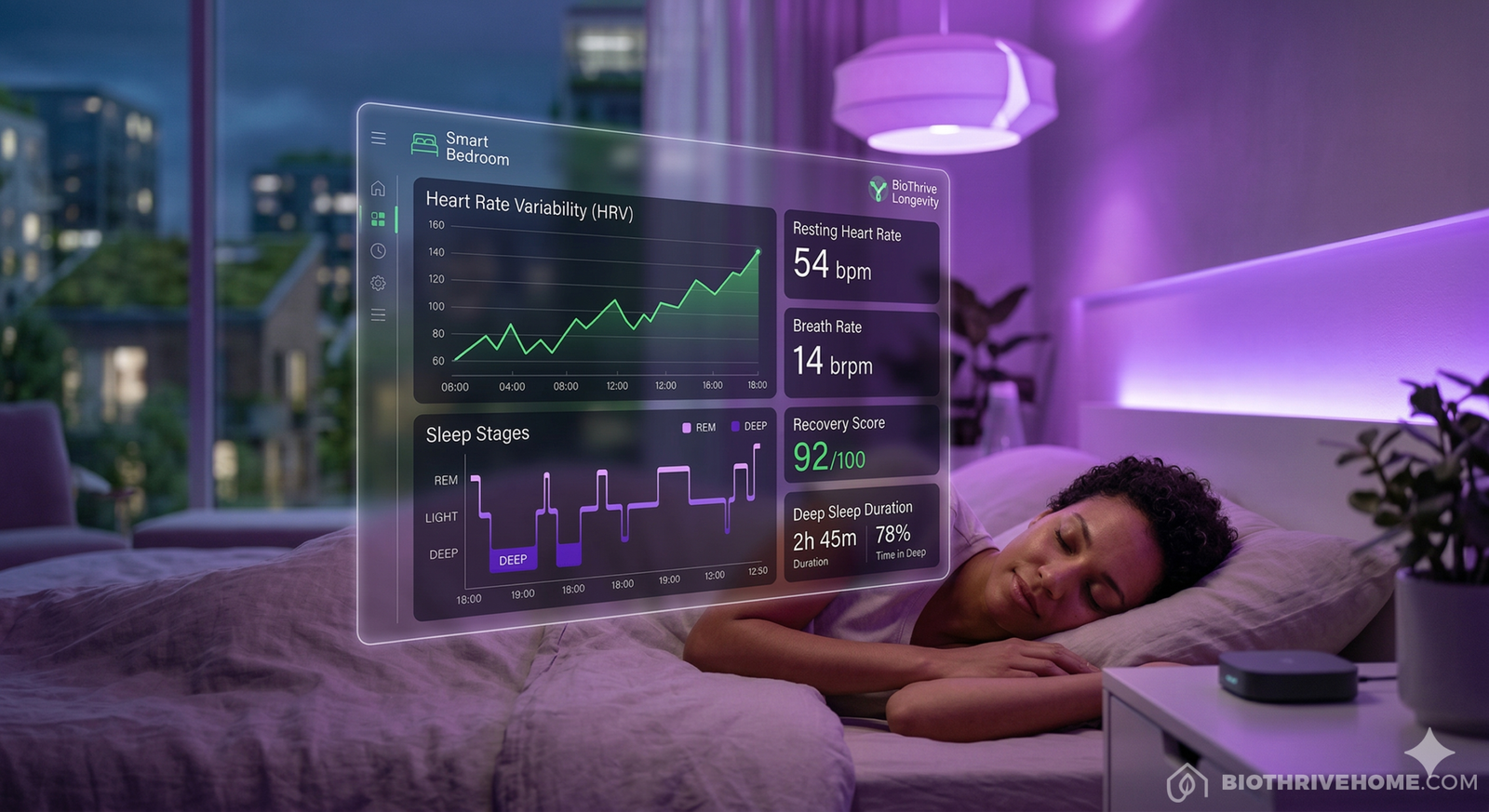
If you use a smart ring or a high-end wearable in 2026, you’ve likely seen your Heart Rate Variability (HRV) score. But while many track it, few know how to actively improve it. At BioThrive Home, we consider HRV the ultimate “litmus test” for your nervous system’s resilience and a critical marker for those focused on redefining their personal longevity through AI.
Here is your actionable guide to hacking your environment to boost your HRV while you sleep.
1. The Temperature-HRV Correlation
Your heart rate and nervous system are hypersensitive to thermal stress. If your body is fighting to stay cool, your HRV will plummet.
- The Strategy: Use AI-driven thermal regulators to keep your core temperature slightly lower during the first four hours of sleep. This encourages the parasympathetic “rest and digest” mode. As we discussed in our guide on using AI for sleep optimization, maintaining a thermal “recovery pod” is the fastest way to see an overnight jump in your recovery stats.
2. Managing Late-Night Glycemic Spikes
What you eat—and when—dictates your heart’s workload at 3 AM. Spikes in blood glucose lead to increased resting heart rates and suppressed HRV.
- The Strategy: Use data from your at-home biohacking kits to track biomarkers like post-dinner glucose. If your HRV is consistently low, try a “fasting window” of 3 hours before bed. AI nutrition apps can now predict exactly how a late-night snack will impact your morning readiness score.
3. Light Pollution and Melatonin Precision
Even microscopic amounts of blue light can interfere with your circadian rhythm, keeping your sympathetic nervous system “on guard” during the night.
- The Strategy: Beyond just wearing blue-light blockers, integrate your home’s lighting system with your sleep tracker. When your wearable detects you are entering a “wind-down” phase, your indoor gardening LED lights and house lamps should shift to a deep amber spectrum, signaling your heart to enter its most restorative state.
4. Breathwork and CO2 Levels
High CO2 levels in a closed bedroom can trigger a subtle “suffocation” stress response in the brain, lowering HRV.
- The Strategy: Ensure your smart home ventilation is active. Combining oxygen-producing indoor plants with AI air sensors creates the perfect atmospheric balance for high-quality recovery.
Conclusion: Data is the Roadmap, HRV is the Destination
Optimizing your HRV isn’t about one magic trick; it’s about creating a consistent, bio-digital feedback loop. By adjusting your environment based on the data your body provides, you turn sleep into a professional-grade recovery session.