The End of Guesswork: Why 24/7 Biometric Tracking is the Ultimate Longevity Tool

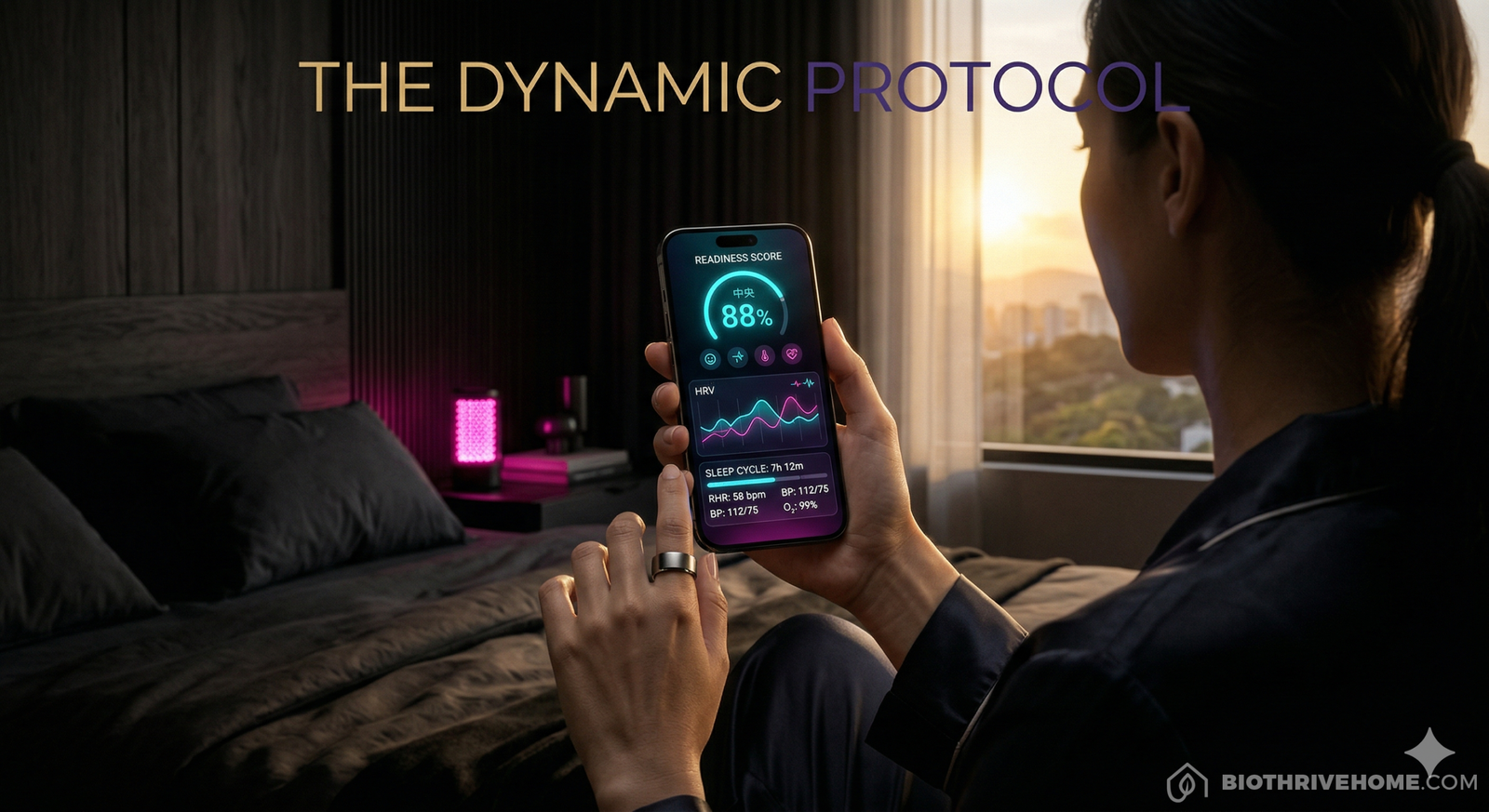
For generations, humanity has relied on a fundamentally flawed metric to assess health: how we feel. You wake up, assess your subjective energy levels, and decide whether you are healthy or getting sick. But in the era of algorithmic health, relying on your feelings is the equivalent of driving a high-performance sports car with a blindfold on. By the time you “feel” a symptom, the biological damage—whether it is cellular inflammation, a viral load, or severe metabolic stress—has already occurred.
If your goal is true proactive bio-optimization, you must eliminate the guesswork. The foundation of extending your healthspan is not just eating well or exercising; it is continuous, 24/7 data acquisition. Welcome to the science of biometric tracking, where we transform the human body from a mystery into a measurable, optimizable machine.
1. The Illusion of “Feeling Fine” vs. Algorithmic Health
The traditional medical model is inherently reactive. You visit a doctor once a year, they take a snapshot of your blood pressure and basic labs, and send you home. This sick-care system waits for you to break before attempting to fix you.
- The Invisible Decline: Chronic stress, sleep deprivation, and poor diet do not immediately manifest as disease. They simmer silently, increasing your biological age day by day. You might feel “fine” while your internal systems are actively decaying.
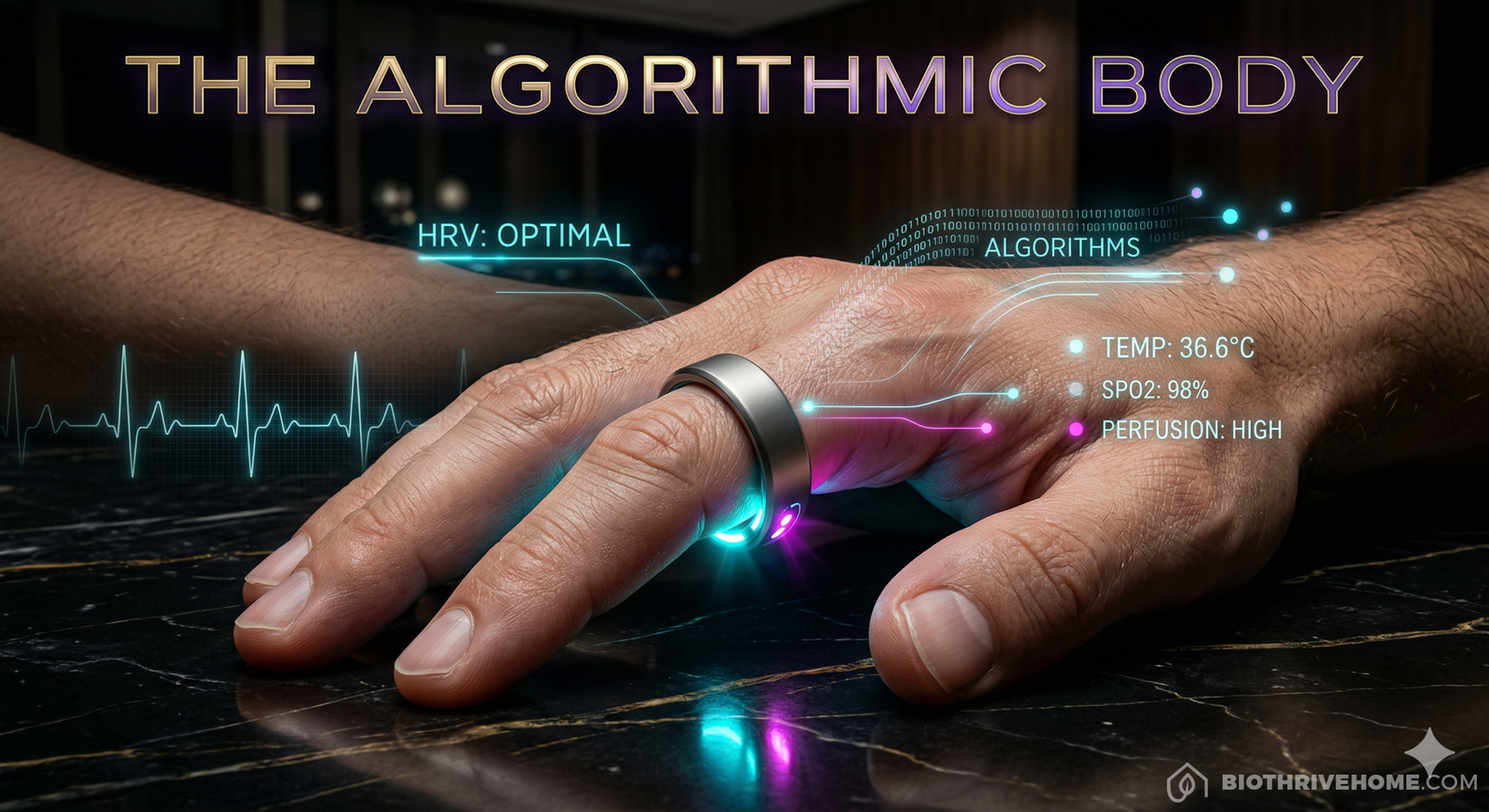
- The Data-Driven Shift: Algorithmic health changes the paradigm. By wearing a clinical-grade biometric sensor 24/7, you capture thousands of data points daily. You establish a precise baseline of your unique physiology, allowing algorithms to detect micro-deviations in your temperature or heart rate long before conscious symptoms appear.
2. The Master Metric: Heart Rate Variability (HRV)
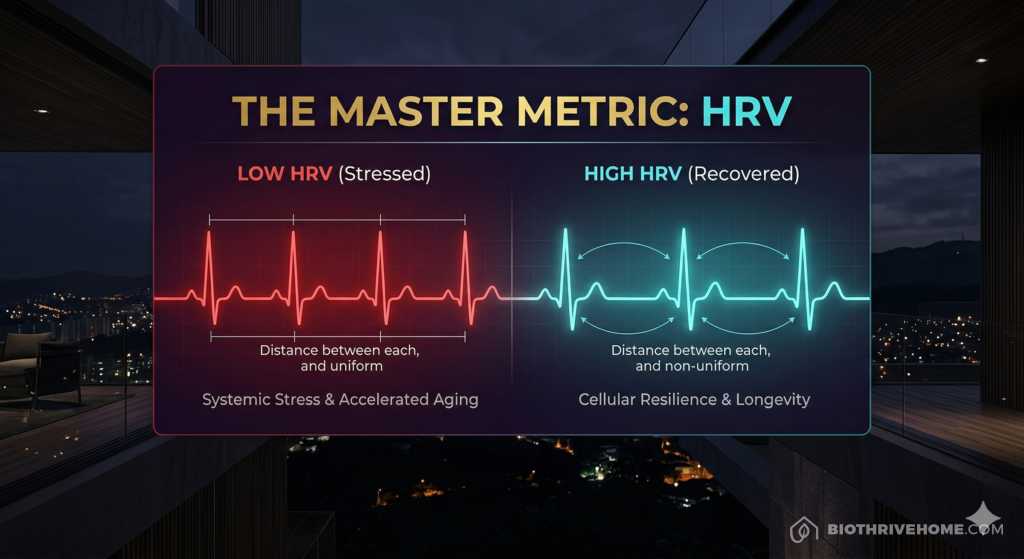
If there is one biomarker that defines your biological sovereignty, it is Heart Rate Variability (HRV). HRV is not your heart rate; it is the exact measurement of the time variation between each heartbeat.
- Decoding the Nervous System: Your heart does not beat like a metronome. A highly variable time between beats indicates a resilient, adaptable autonomic nervous system that can fluidly switch between “fight or flight” (sympathetic) and “rest and digest” (parasympathetic) states.
- The Predictor of Healthspan: A consistently high HRV is the ultimate sign of youth, athletic readiness, and deep cellular recovery. Conversely, a suppressed HRV is a glaring red flag. It indicates that your body is trapped in a state of systemic stress, actively struggling to recover from environmental toxins, poor diet, or overtraining.
3. The 24/7 Biological Dashboard
To achieve a frictionless optimization protocol, your biometric tracking must be continuous and invisible. It cannot interrupt your day; it must seamlessly integrate into it.
- Nocturnal Basal Temperature: Tracking your body temperature exclusively while you sleep provides a highly accurate look at your systemic inflammation and immune response. A slight elevation in your basal temperature can predict a viral infection days before a cough or fever develops.
- Precision Sleep Architecture: Simply knowing you were in bed for eight hours is useless data. You must track exactly how much time you spent in Deep Sleep (for physical repair) and REM sleep (for cognitive consolidation). Only then can you begin to hack your environment with red light therapy or temperature regulation to actively improve those specific stages.
💍 The Algorithmic Body Masterclass
Don’t miss any part of our definitive guide to wearables and biometric optimization:
- Part 1: The Paradigm: [The End of Guesswork: Why 24/7 Biometric Tracking is the Ultimate Longevity Tool]
- Part 2: The Protocol: [How to Optimize Your Daily Routine Using Smart Ring Data]
- Part 3: The Gear: [Oura Ring Gen 4 vs. Ultrahuman Ring AIR: The Ultimate Biohacker’s Review (2026)]
Conclusion: You Cannot Optimize What You Do Not Measure
Biological sovereignty requires absolute transparency. As long as you guess how your body is recovering, you are leaving your healthspan to chance. By integrating 24/7 biometric tracking into your lifestyle, you step into the driver’s seat of your physiology. You decode the invisible signals of your nervous system and turn subjective feelings into actionable, algorithmic data.
Ready to turn this data into action? In our next guide, we will break down exactly how to read your daily biometric scores and use them to dynamically adjust your training, diet, and sleep protocols.