
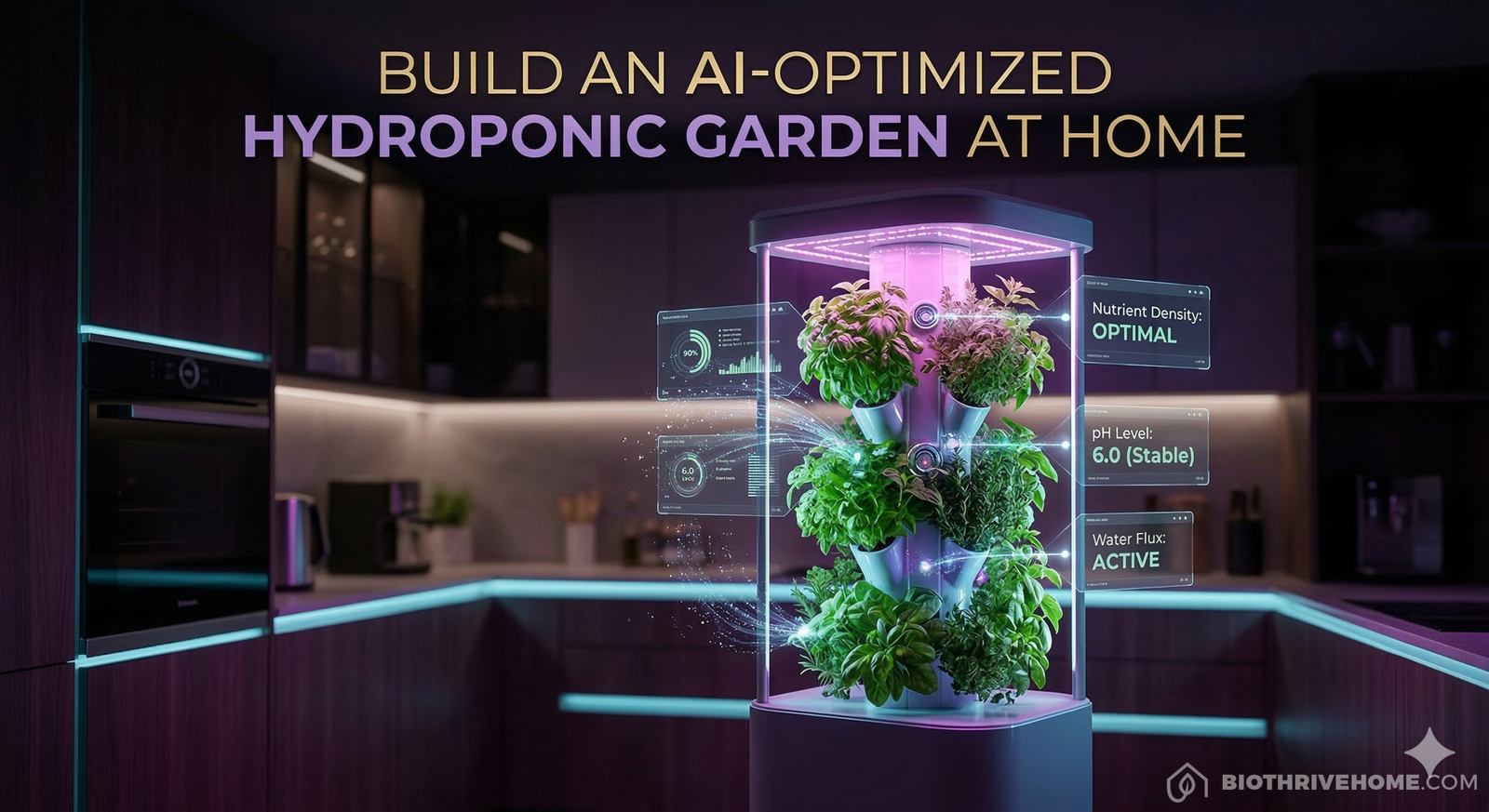
The produce at your local grocery store is engineered for shelf life and transport, not for human performance. By the time a spinach leaf reaches your plate, it has lost a significant percentage of its vital micronutrients. To truly optimize your cellular healthspan, you must consume hyper-local, living foods.
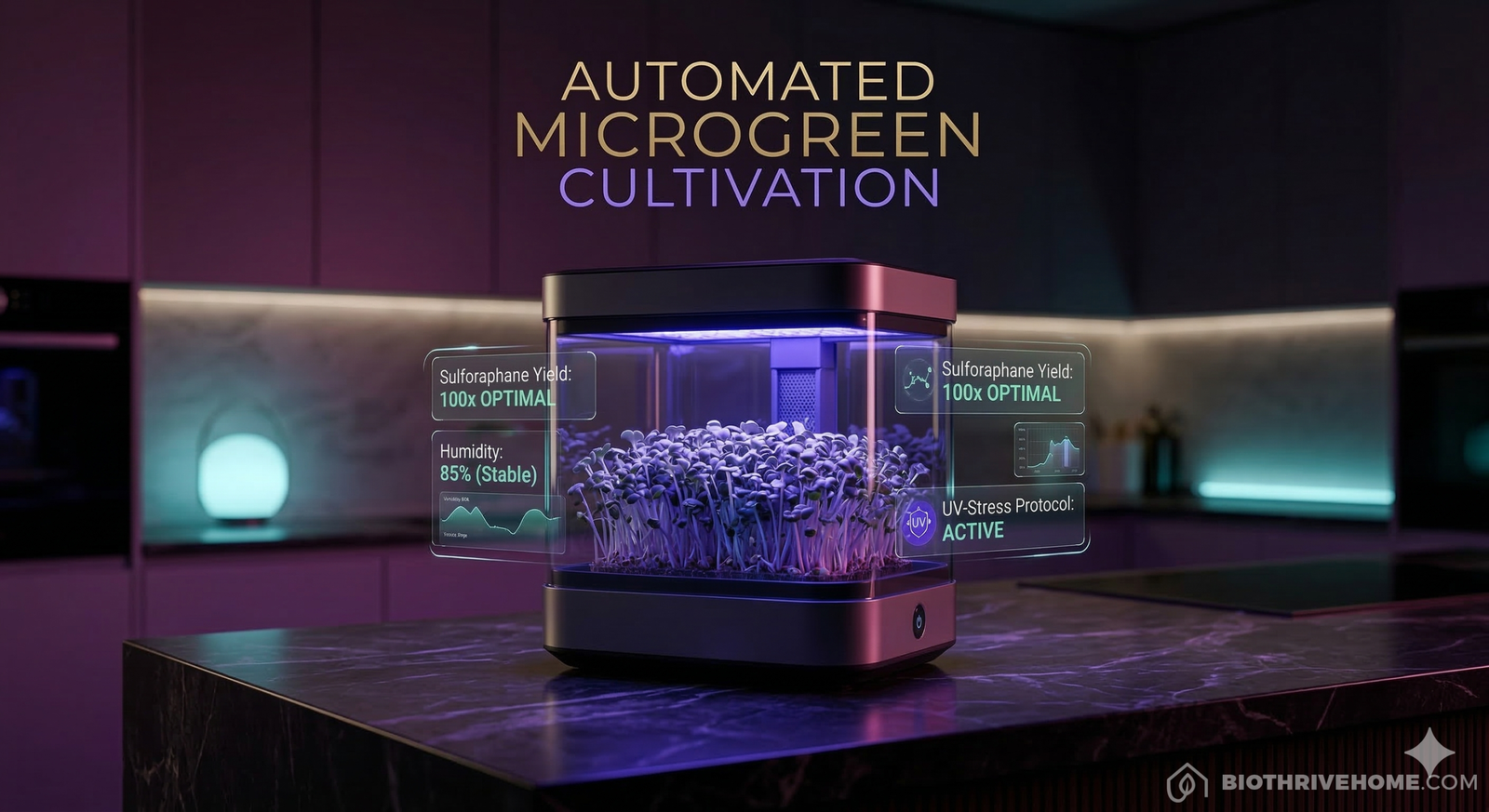
Traditional gardening is unpredictable and labor-intensive. In 2026, the solution is precision agriculture brought into your kitchen. By deploying an AI-optimized indoor hydroponic system, you can cultivate medical-grade, nutrient-dense superfoods on autopilot, using zero soil and 90% less water. Here is your step-by-step guide to automating your sustainable nutrition.
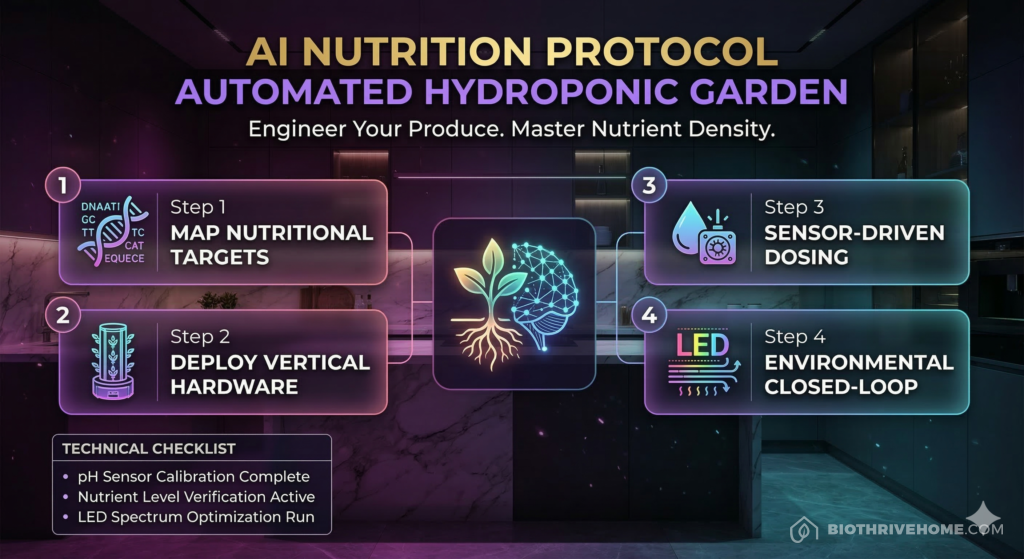
Step 1: Map Your Nutritional Deficiencies (Data)
Do not grow random crops. Your indoor garden should be a targeted extension of your biological needs.
- How To: Utilize the data from your gut intelligence tests, as discussed in our AI Precision Fermentation and Microbiome Guide. If your microbiome data indicates a need for specific polyphenols or antioxidants to reduce systemic inflammation, program your Personal AI Health Assistant to select the exact seeds—such as high-sulforaphane broccoli sprouts or specific dark leafy greens—that will biologically support your specific gut flora.
Step 2: Deploy Automated Vertical Hardware (The Farm)
Eliminate the mess and unpredictability of soil.
- How To: Invest in a high-tech, soil-free vertical hydroponic or aeroponic tower. These sleek, space-saving structures fit directly into your AI-optimized kitchen or living area. Because the roots are suspended in water or air, the plants absorb nutrients exponentially faster, resulting in rapid growth cycles and higher nutrient density compared to traditional soil farming.
Step 3: Implement Sensor-Driven Nutrient Dosing
Plants, like humans, need specific micro-macros to thrive. Guessing the nutrient mix leads to weak crops.
- How To: Connect your hydroponic reservoir to smart dosing pumps and continuous sensors. Utilizing the same logic from Automating Smart Water Filtration and Remineralization, the sensors constantly read the water’s pH and TDS (Total Dissolved Solids). If the pH drifts or the nutrient levels drop, the AI instantly triggers the micro-pumps to inject the exact required dose of liquid minerals, ensuring frictionless, perfect feeding 24/7.
Step 4: Automate the Environmental Closed-Loop
Plants rely heavily on light spectrums and air flow to signal their growth phases.
- How To: Sync your garden’s environment with your smart home hub. The AI controls the full-spectrum LED grow lights, matching specific light recipes (e.g., high blue light for vegetative growth, red light for flowering) to the plant’s current life cycle. Simultaneously, the system manages local humidity and triggers automated micro-fans to simulate wind, strengthening the plant stems. This is the agricultural equivalent of the AI-Guided Invisible Environment Air Quality protocol.
Conclusion: Biological Sovereignty
By building an AI-optimized hydroponic garden, you completely eliminate the friction between harvest and consumption. You transition from a passive consumer of degraded produce to an active engineer of your own living, medical-grade nutrition. This automated ecosystem guarantees a constant supply of peak-state cellular fuel, right inside your home.