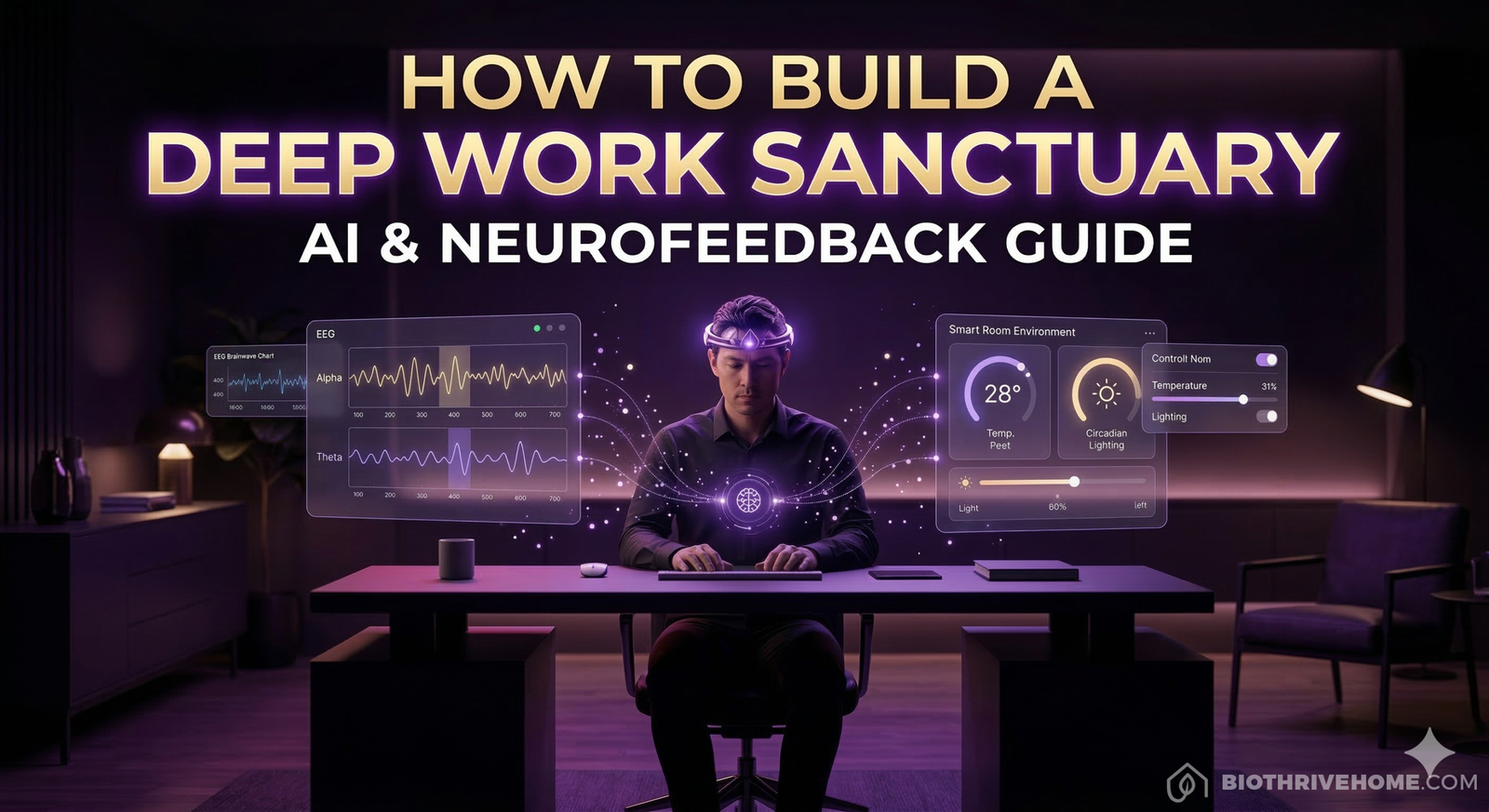
How to Eradicate Indoor Toxins and Noise: The AI-Guided Invisible Environment Guide

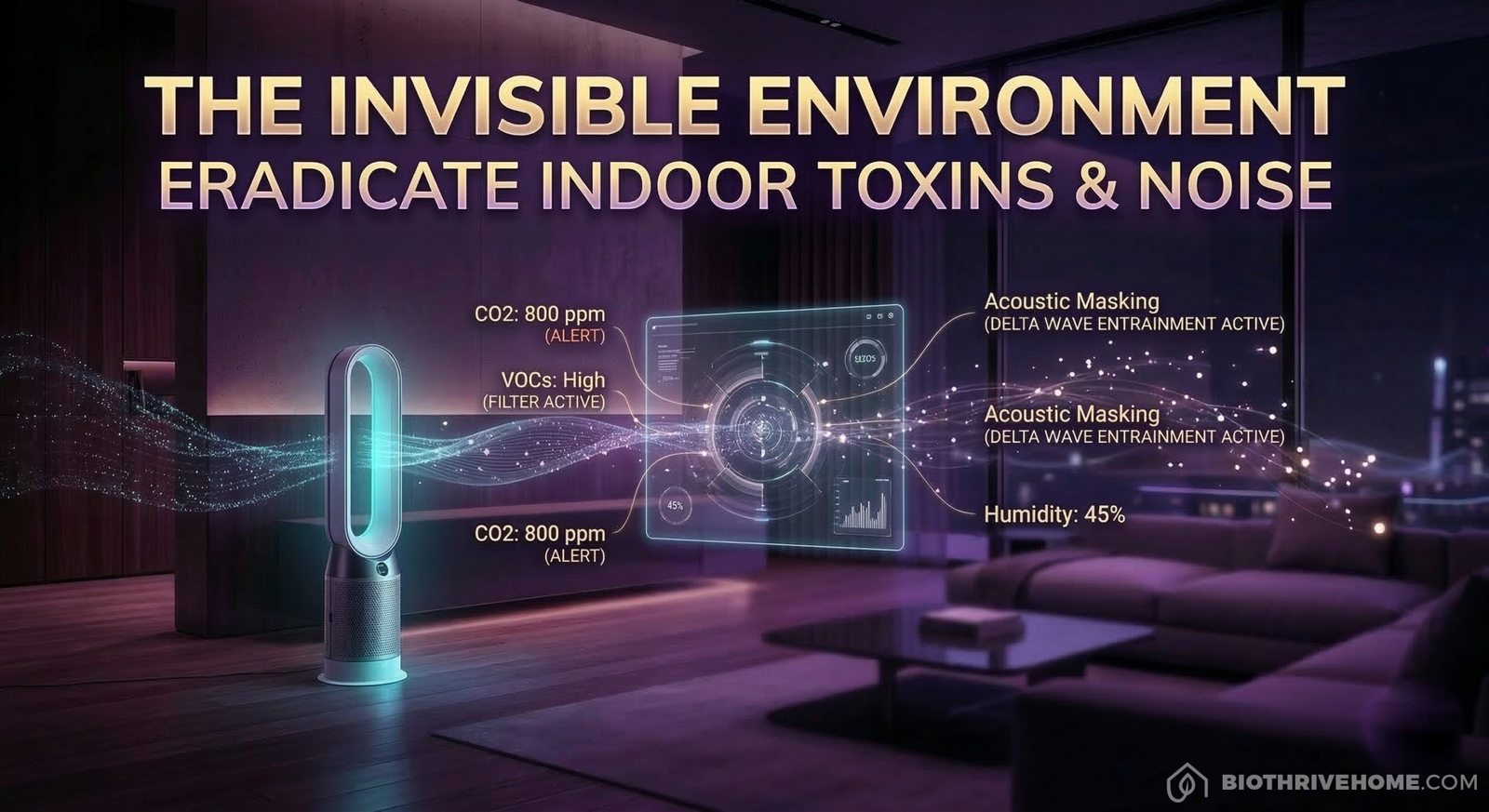
We meticulously track our macronutrients, optimize our sleep architecture, and monitor our HRV. Yet, the two most constant inputs into our biology are completely invisible: the air we breathe and the acoustic frequencies we absorb.
Studies show that poor indoor air quality (specifically high CO2 and VOCs) can plummet cognitive performance by over 60%, while chronic background noise triggers micro-spikes in cortisol, completely shattering deep focus. In 2026, biohacking your physical space isn’t enough; you must engineer your “Invisible Environment.” Here is your step-by-step guide to automating medical-grade air and neuro-responsive acoustic isolation in your home.
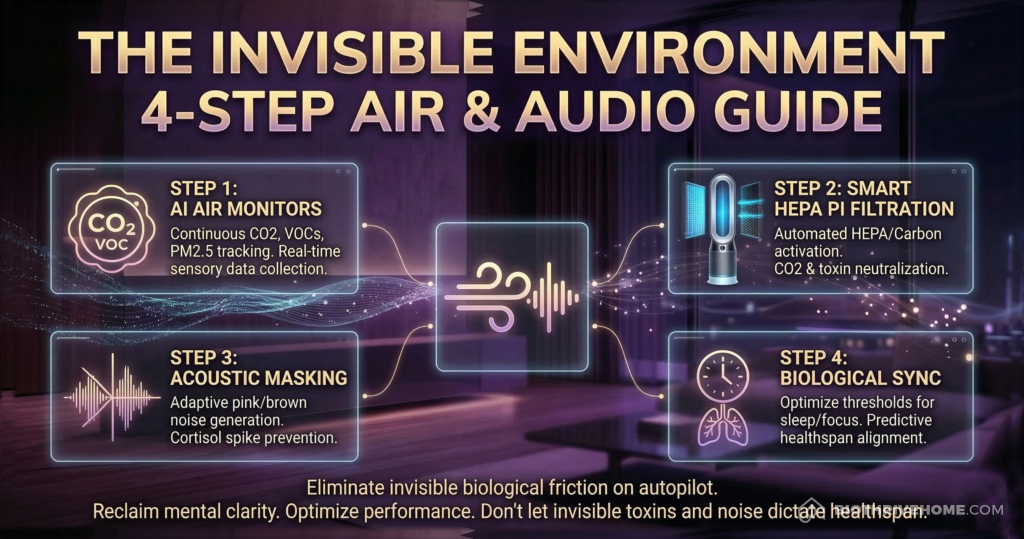
Step 1: Deploy AI Air Quality Monitors (The Measurement)
You cannot filter what you do not track. Most homes have indoor air that is 2 to 5 times more polluted than outdoor air.
- How To: Install continuous, smart air quality monitors (like the Awair Element or Airthings View Plus) in your primary living and working spaces. These devices act as the sensory organs of your home, tracking Volatile Organic Compounds (VOCs), PM2.5 (micro-dust), CO2 levels, and humidity in real-time. This foundational data collection is just as critical as the biological tracking we established in How to Start Tracking Your Biomarkers at Home: The Beginner’s Biohacking Guide.
Step 2: Automate HEPA & Active Carbon Purification (The Filtration)
Standard air purifiers are reactive and often turned on too late. A data-driven environment neutralizes threats before they affect your biology.
- How To: Connect your smart monitors (Step 1) to AI-enabled, medical-grade HEPA and active carbon purifiers. Program an IFTTT (If This Then That) or Apple Home automation rule: If CO2 exceeds 800 ppm, or if VOCs spike after cooking or cleaning, the purifiers automatically engage at maximum velocity until the room returns to baseline. This creates the optimal breathing environment essential for the recovery protocols discussed in How to Build a Data-Driven Sleep Sanctuary in 2026 (A Step-by-Step Guide).
Step 3: Implement Neuro-Responsive Acoustic Masking (The Isolation)
You cannot always control the noise coming from the street or your neighbors, but you can control how those soundwaves interact with your nervous system.
- How To: True acoustic isolation involves active sonic masking. Use a smart sound ecosystem integrated with your home hub. When your system detects disruptive variable noise (the kind that spikes stress), it should autonomously generate adaptive pink or brown noise to “raise the noise floor.” This masks disruptive frequencies and protects your cognitive state, serving as the foundation for the focus techniques we detailed in How to Build an AI-Powered Deep Work Sanctuary Using Neurofeedback.
Step 4: Sync with Biological Rhythms (The Optimization)
Your invisible environment should adapt to your biological needs throughout the day.
- How To: Give your AI health assistant control over the purification and acoustic thresholds. During your deep work hours, the system prioritizes aggressive CO2 reduction (to keep you sharp) and strict acoustic masking. As you approach bedtime, the system shifts to ultra-quiet, low-velocity air filtration to minimize decibels, and switches the acoustic profile to sleep-inducing delta-wave entrainment.
Conclusion: Breathing and Hearing on Autopilot
By engineering your invisible environment, you remove the hidden biological friction that drains your energy and focus. Automating your air quality and acoustic isolation guarantees that every breath you take and every sound you hear is actively supporting your cognitive longevity and physical healthspan.