
We meticulously track our own protein intake, carbohydrate timing, and caloric deficits to optimize our healthspan. Yet, the standard protocol for feeding our pets remains highly unscientific: scooping processed kibble into a bowl until it looks “about right.”
Canine and feline obesity is an epidemic, driven entirely by human error and portion distortion. If you want your companion to live a long, disease-free life, you must replace intuition with data. In 2026, calculating your pet’s exact macro-nutritional needs and automating their delivery is the highest-leverage biohack you can implement. Here is your definitive guide to mathematical pet nutrition.
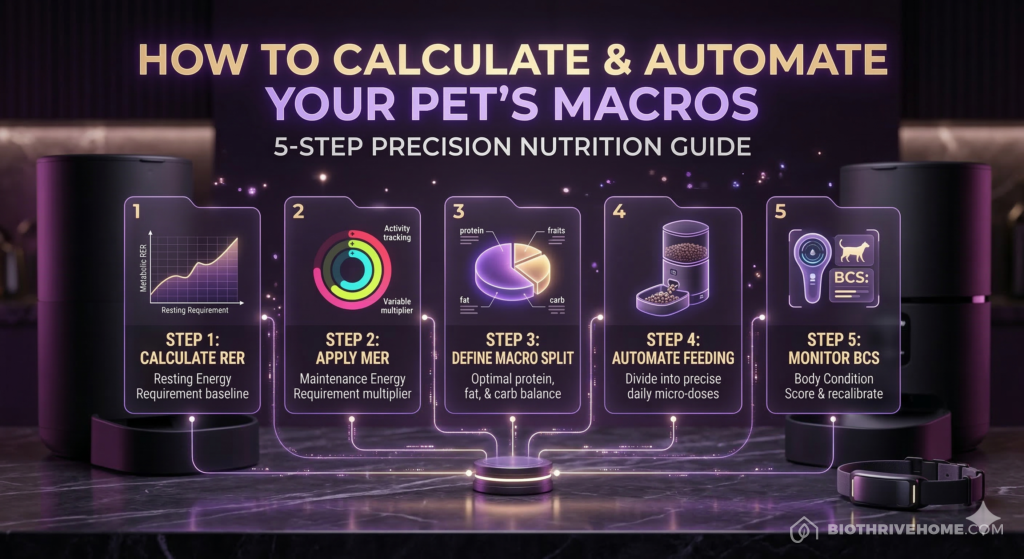
Step 1: Calculate the Resting Energy Requirement (RER)
Before you can automate, you need the biological baseline. The RER tells you exactly how many calories your pet burns just to stay alive at rest.
- How To: The veterinary gold-standard formula for RER is: 70 x (Body Weight in kg)^0.75. For example, a healthy 10kg dog requires roughly 394 kcal per day simply to exist. You can use an online veterinary calculator to find this exact number. This is your foundation. Never feed below this number without strict medical supervision.
Step 2: Apply the Maintenance Energy Requirement (MER) Multiplier
Your pet doesn’t just rest; they move, play, and burn variable energy. The MER adjusts the baseline RER based on their lifestyle.
- How To: Multiply the RER by a factor specific to your pet. A neutered adult dog usually requires a multiplier of 1.6, while a highly active working dog might need 2.0 to 3.0. Instead of guessing, use data. Sync your pet’s biometric data from a wearable, as discussed in The Sentinel Collar: Best AI-Powered Pet Health Monitors of 2026, to get an accurate daily burn rate and dynamically adjust this multiplier.
Step 3: Define the Optimal Macro Split
Not all calories are created equal. Dogs and cats have entirely different evolutionary metabolic engines than humans.
- How To: For optimal cellular repair, adult dogs generally thrive on a high-protein, moderate-fat, low-carb split (e.g., 30% Protein, 20% Fat, and the rest minimal, complex carbohydrates). Cats, being obligate carnivores, require almost zero carbohydrates. Check the nutritional label of your premium pet food to determine how many grams of the food equal your calculated MER from Step 2.
Step 4: Automate the Micro-Dosing Schedule
Feeding one massive meal a day spikes insulin, causing metabolic stress and accelerating biological aging. You must distribute the caloric load.
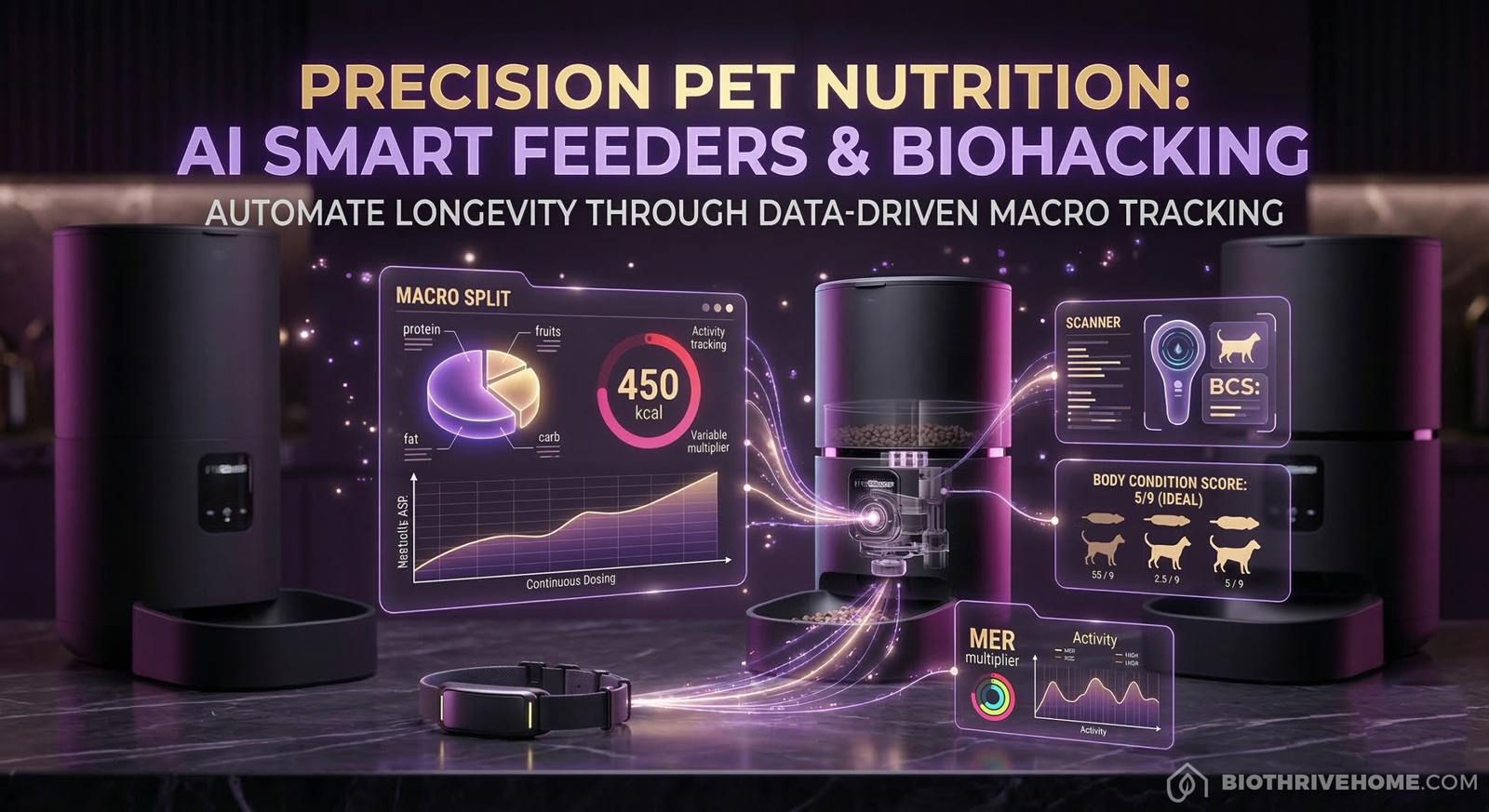
- How To: Divide your pet’s total daily gram requirement into 4 to 6 small “micro-doses.” Program this exact schedule into a smart dispenser. As we covered in Precision Nutrition: Why AI Smart Pet Feeders are the Ultimate Biohack in 2026, these AI devices will weigh the food to the exact gram and dispense it throughout the day, completely removing human error and stabilizing your pet’s blood sugar.
Step 5: Monitor the Body Condition Score (BCS) and Recalibrate
Metabolism changes with age, season, and activity level. A static diet will eventually fail.
- How To: Once a month, perform a Body Condition Score check (feeling for rib definition without excess fat). If the BCS drifts above the ideal range (usually a 4 or 5 out of 9), drop the daily automated caloric intake by exactly 5% and re-evaluate in two weeks. Maintaining this perfect biological condition is exactly how you unlock lower veterinary costs, a concept we detailed in The Data-Driven Policy: Is Pet Insurance Worth it in 2026?.
Conclusion: The Mathematics of Healthspan
By calculating exact energy requirements and automating the delivery through smart home technology, you eliminate the leading cause of preventable pet diseases. Precision nutrition guarantees that your companion receives the exact fuel they need for maximum vitality, extending their healthspan through the power of data.