How to Build a High-Performance Home Office: AI-Guided Focus & Health

Most home offices are productivity killers. Stale air, high CO2 levels, and static lighting disrupt your circadian rhythm and trigger brain fog. In 2026, the ultimate professional edge is not a faster computer; it is a bio-optimized environment that adapts to your cognitive load in real-time.
By integrating your Personal AI Health Assistant with smart environment hardware, you can automate your focus. Here is your step-by-step guide to engineering the perfect high-performance home office.
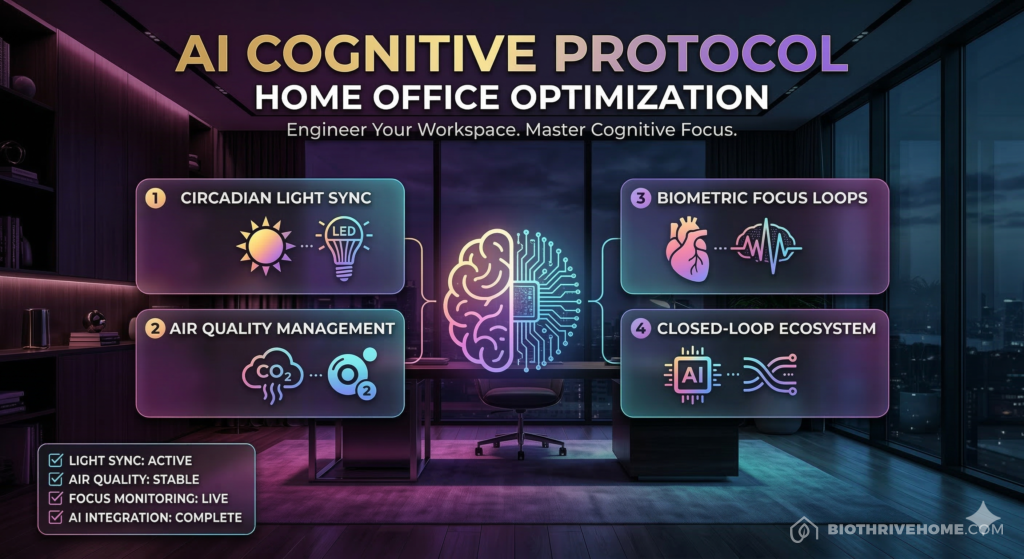
Step 1: Automate Circadian Lighting Sync
Lighting is the primary driver of your internal clock. Standard office lights cause cortisol spikes at the wrong times and disrupt sleep.
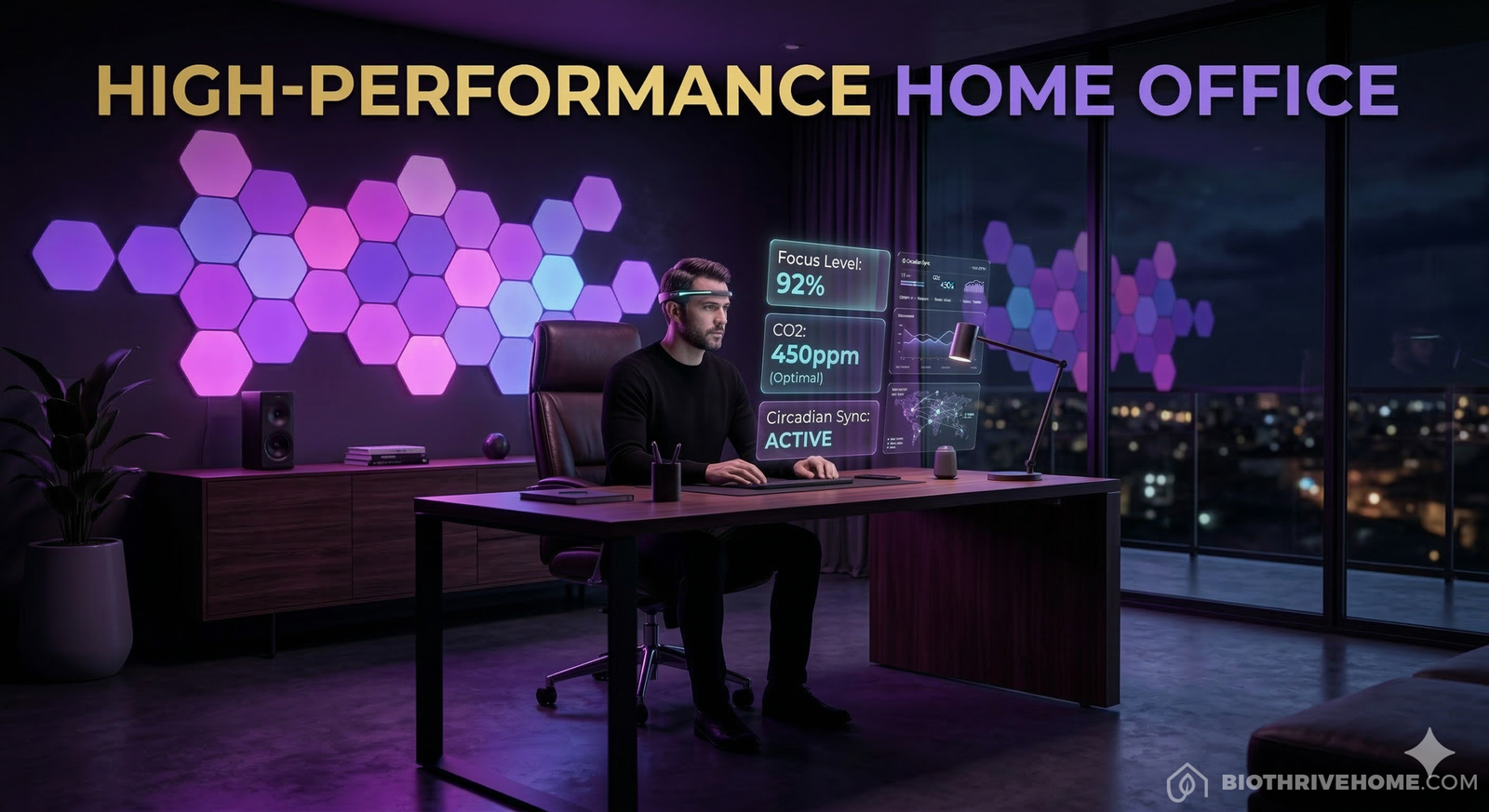
- How To: Install a smart, full-spectrum lighting system that adjusts its color temperature and intensity based on the time of day and your specific tasks. The AI assistant uses data from your Wearable Sleep Trackers to detect if you had poor sleep, automatically increasing blue light exposure in the morning to suppress melatonin and boost alertness for deep work.
Step 2: Implement AI-Guided Air Quality Management
High levels of CO2 and Volatile Organic Compounds (VOCs) significantly impair executive function and decision-making.
- How To: Connect smart air quality monitors to your HVAC or high-tech purifiers, as detailed in our Invisible Environment Guide. The system monitors CO2 in parts per million (ppm). When levels exceed 800ppm, the AI triggers an automated fresh air exchange, ensuring your brain receives the oxygen necessary for peak cognitive output.
Step 3: Integrate Biometric Focus Loops
Your environment should respond to your stress levels.
- How To: Sync your home office with your heart rate variability (HRV) data. Using the same logic from Automated Acoustic and Vibration Recovery, the AI assistant monitors your stress markers while you work. If it detects a sustained high-stress state, the system automatically shifts the room’s lighting to a calming amber hue and activates subtle Vagus Nerve Stimulation (VNS) frequencies to bring you back to an optimal “flow state.”
Step 4: The Closed-Loop Cognitive Ecosystem
The final step is total environmental synchronization.
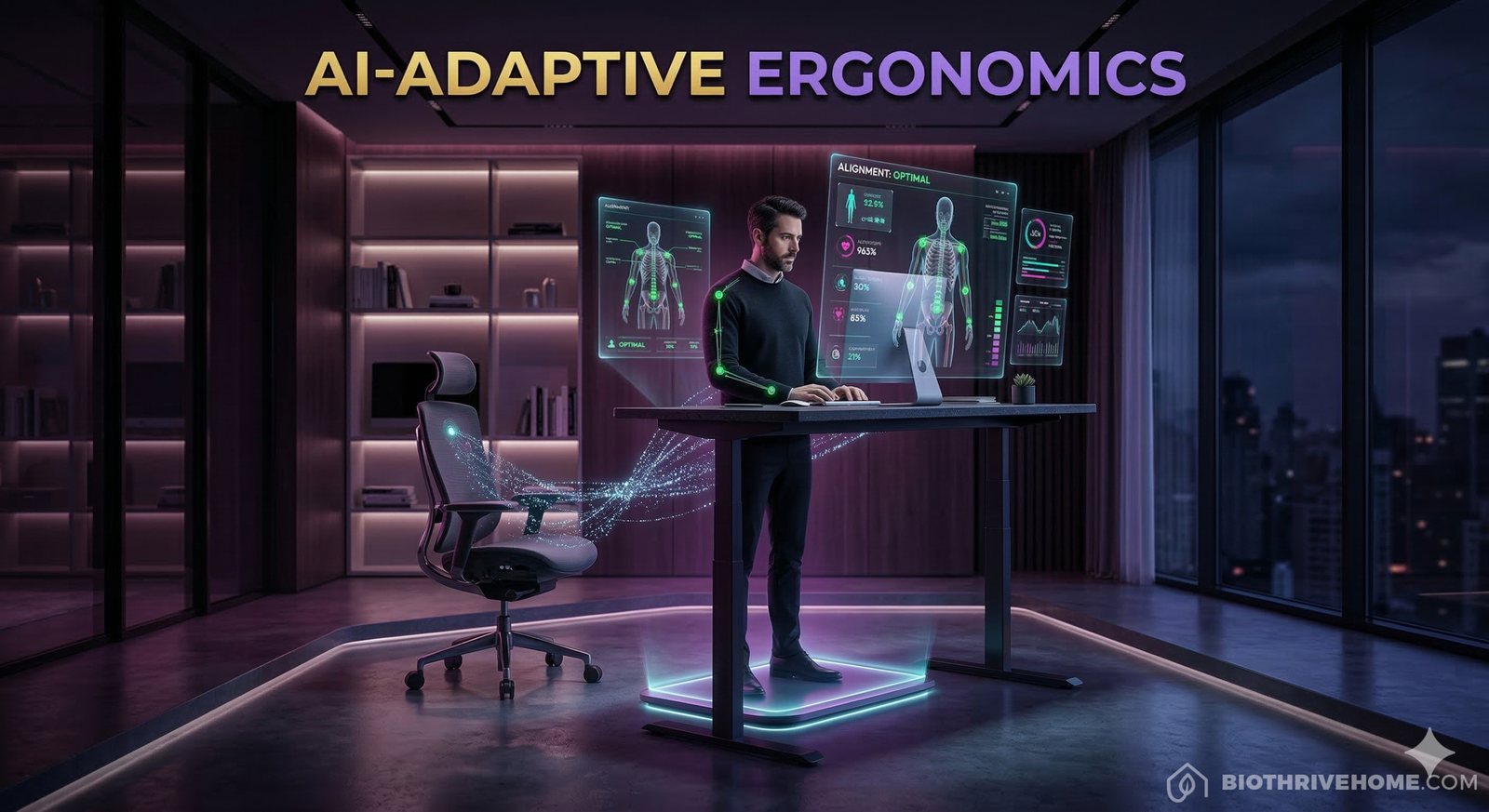
- How To: As you transition from high-intensity tasks to creative work, the AI assistant reconfigures the entire office. This includes adjusting the smart desk height, shifting the air purification to “silent mode,” and even coordinating with your Automated Supplementation Protocol to alert you when it’s time for a nootropic or hydration break.
Conclusion: The New Frontier of Productivity
A high-performance home office is more than a desk and a chair; it is an extension of your biological system. By automating your light, air, and biometric feedback loops, you eliminate environmental friction, allowing your brain to operate at its highest possible level while protecting your long-term healthspan.