
In an economy defined by distraction, the ability to sustain deep, uninterrupted focus is the ultimate competitive advantage. However, relying solely on willpower to ignore notifications and environmental noise is a biologically losing battle. Every distraction spikes cortisol and disrupts your neural flow state.
To achieve elite cognitive performance in 2026, you must engineer your environment to force your brain into a state of deep work. By combining wearable neurofeedback with smart home automation, you can create a “Deep Work Sanctuary”—an isolated physical space that actively trains your brainwaves for maximum concentration. Here is your step-by-step guide to automating your flow state.
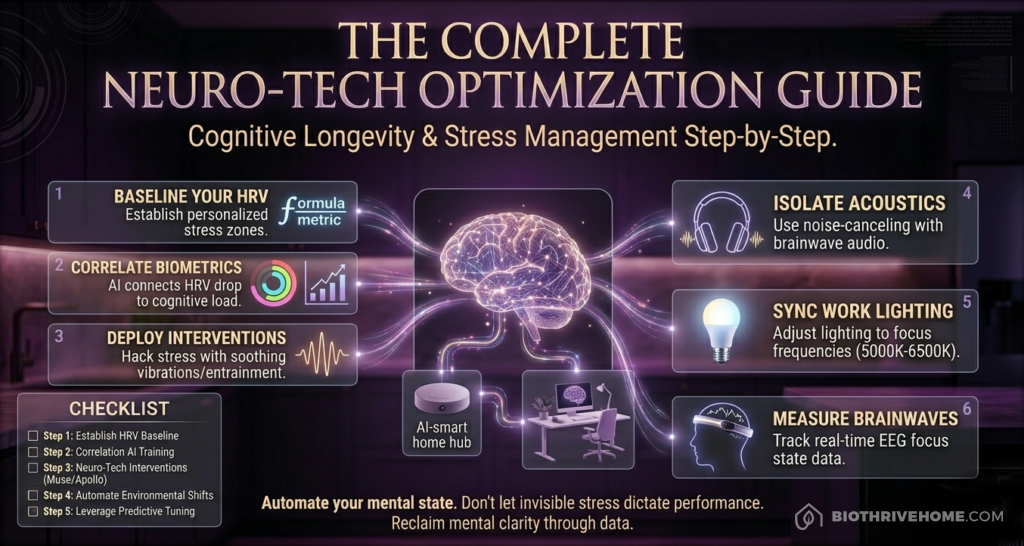
Step 1: Establish Acoustic Isolation and Neural Entrainment
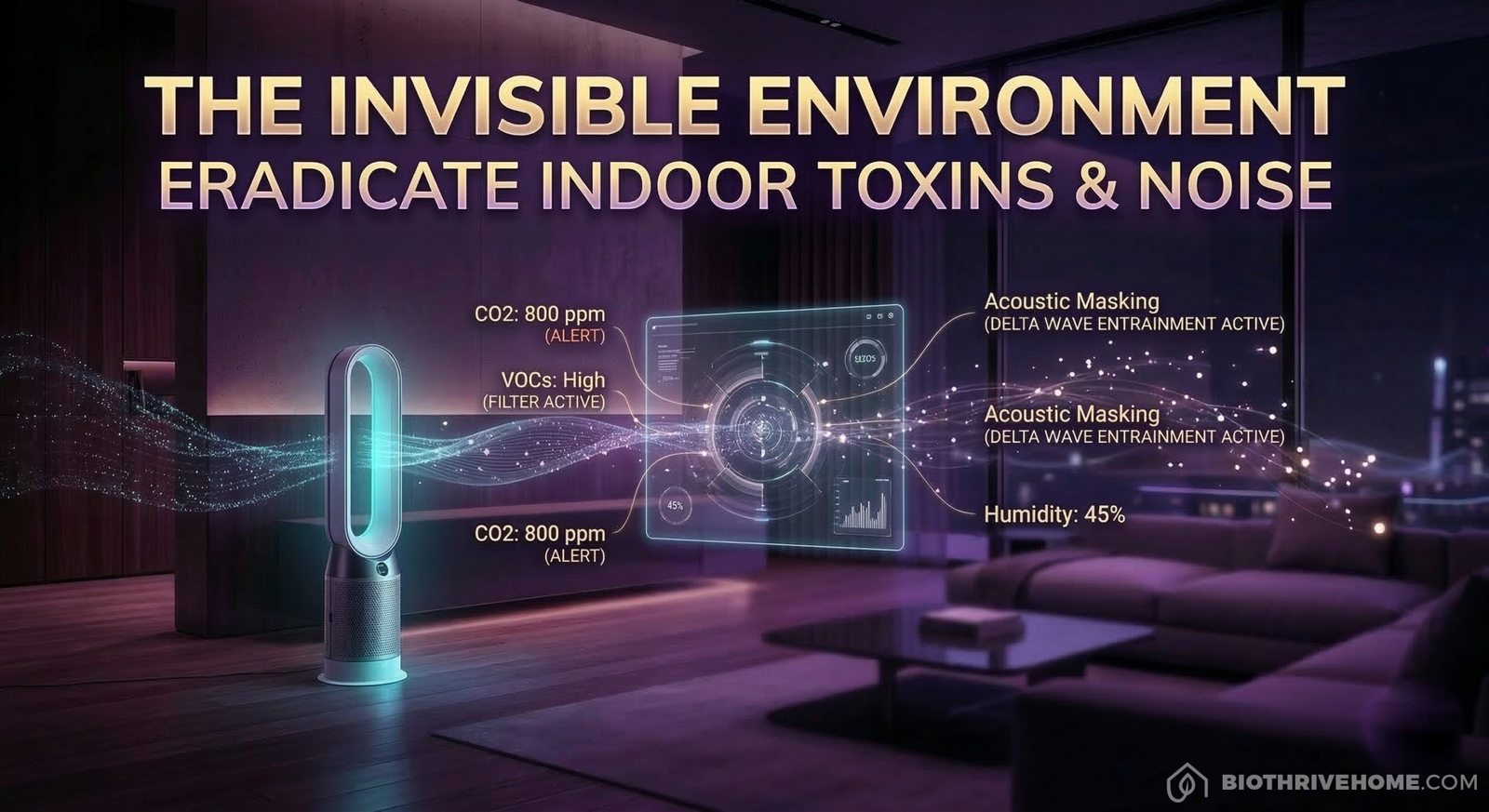
Sound is the most disruptive environmental variable to the human nervous system. Your sanctuary must be acoustically sealed and optimized.
- How To: Do not just block noise; replace it with cognitive fuel. Use active noise-canceling headphones synchronized with a binaural beats or brainwave entrainment app (like Brain.fm). These audio frequencies are scientifically designed to steer your brainwaves away from the high-frequency Beta state (anxiety/scattered thinking) and into the Alpha or Theta states (relaxed focus and deep learning).
Step 2: Calibrate Visual Inputs for Focus
Just as we optimize lighting for sleep, we must optimize lighting for alertness. The wrong color temperature will signal your brain that it is time to relax when you need to execute.
- How To: Upgrade your workspace with a smart, circadian-aligned lighting system. When you initiate a deep work session, program your smart lights to shift to a cool, bright white (around 5000K to 6500K). This specific frequency suppresses melatonin and gently elevates cortisol, keeping you sharp. This is the daytime equivalent of the evening protocols we discussed in The Circadian Smart Home: Hacking Your Lighting for Optimal Hormonal Balance in 2026.
Step 3: Integrate Wearable Neurofeedback
To truly optimize your focus, you need real-time data on what your brain is actually doing. Are you focused, or just staring at the screen?
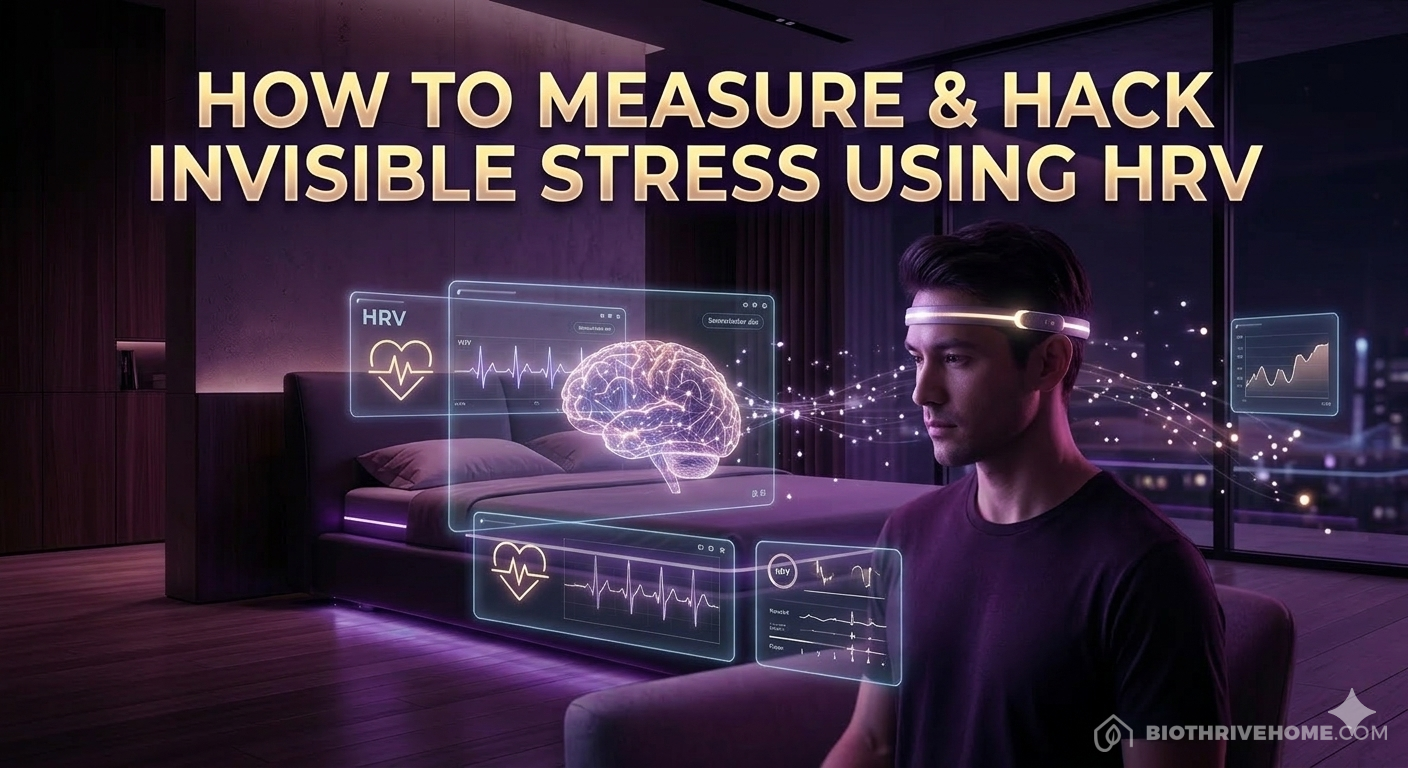
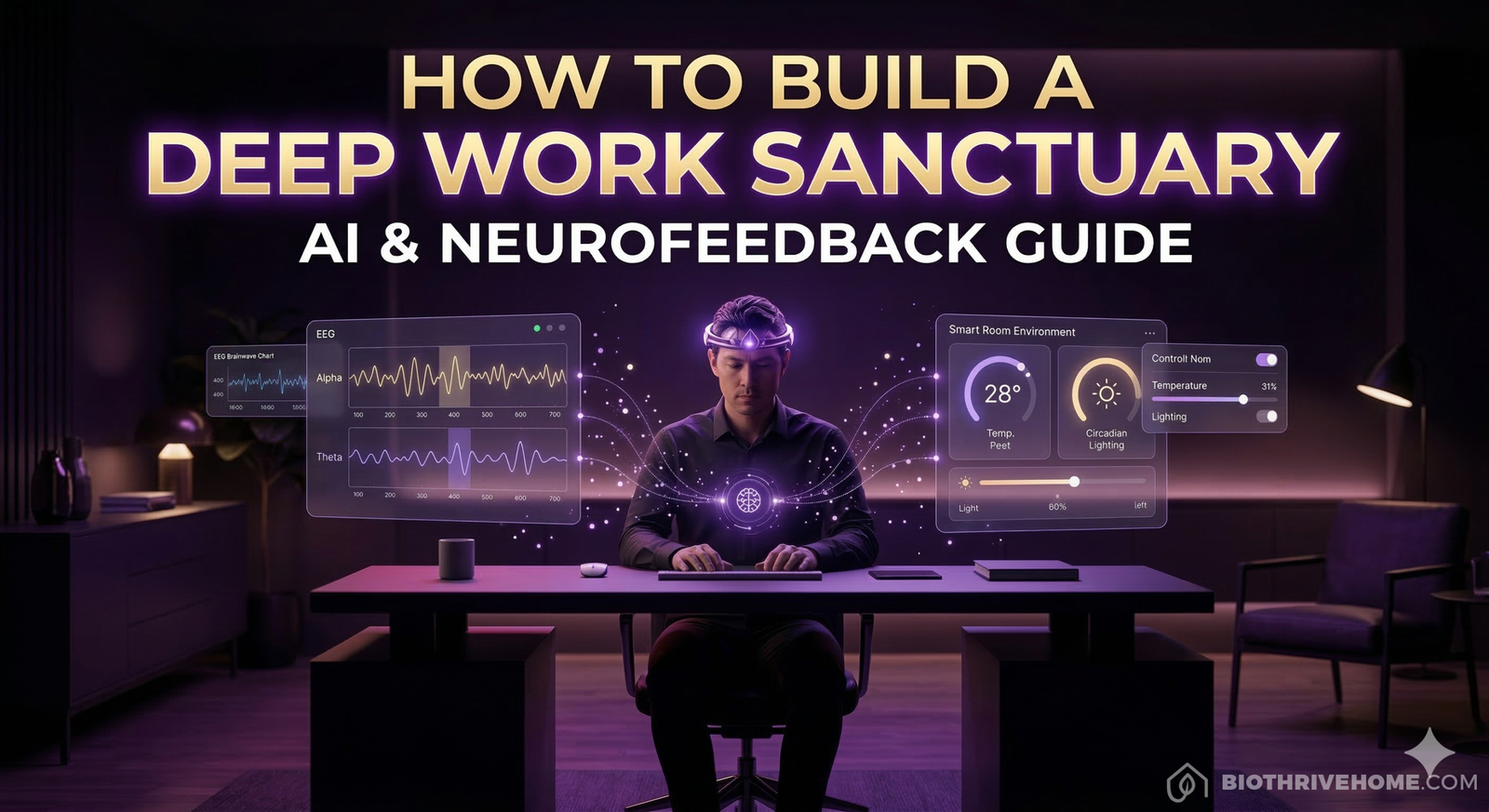
- How To: Equip yourself with a consumer-grade EEG neurofeedback device, such as the Neurosity Crown or Muse Headband. These wearables read your brainwave activity in real-time. When they detect your focus slipping, they can provide immediate auditory feedback—like a subtle shift in the background music—to subconsciously pull your attention back to the task. This active calibration is the cognitive equivalent of the physical monitoring we detailed in How to Measure and Hack Invisible Stress Using HRV: A Step-by-Step Neuro-Tech Guide.
Step 4: Automate the “Flow State” Environment
The true biohack is tying your neuro-tech data directly to your physical environment, removing all manual friction.
- How To: Connect your neurofeedback wearable and smart lighting to your central AI health and productivity assistant. Set an automation rule: when you sit at your desk and the EEG detects a sustained “focus state” for 5 minutes, the AI automatically activates “Do Not Disturb” on all your devices, locks the smart door to your office, and drops the room temperature to an optimal 68°F (20°C) to prevent lethargy. This creates a closed-loop system governed by your biological data, managed by the tools explored in The Rise of the Personal AI Health Assistant: Your 24/7 Longevity Coach.
Conclusion: Engineering the Ultimate Mind
By building a Deep Work Sanctuary, you eliminate the cognitive tax of resisting distraction. You are no longer just working in a room; you are operating within a synchronized, neuro-responsive ecosystem. By measuring your brainwaves and automating your lighting, acoustics, and digital boundaries, you guarantee sustained periods of high-yield cognitive output, protecting your mental energy for the tasks that truly matter.