How to Automate Smart Water Filtration and Remineralization at Home

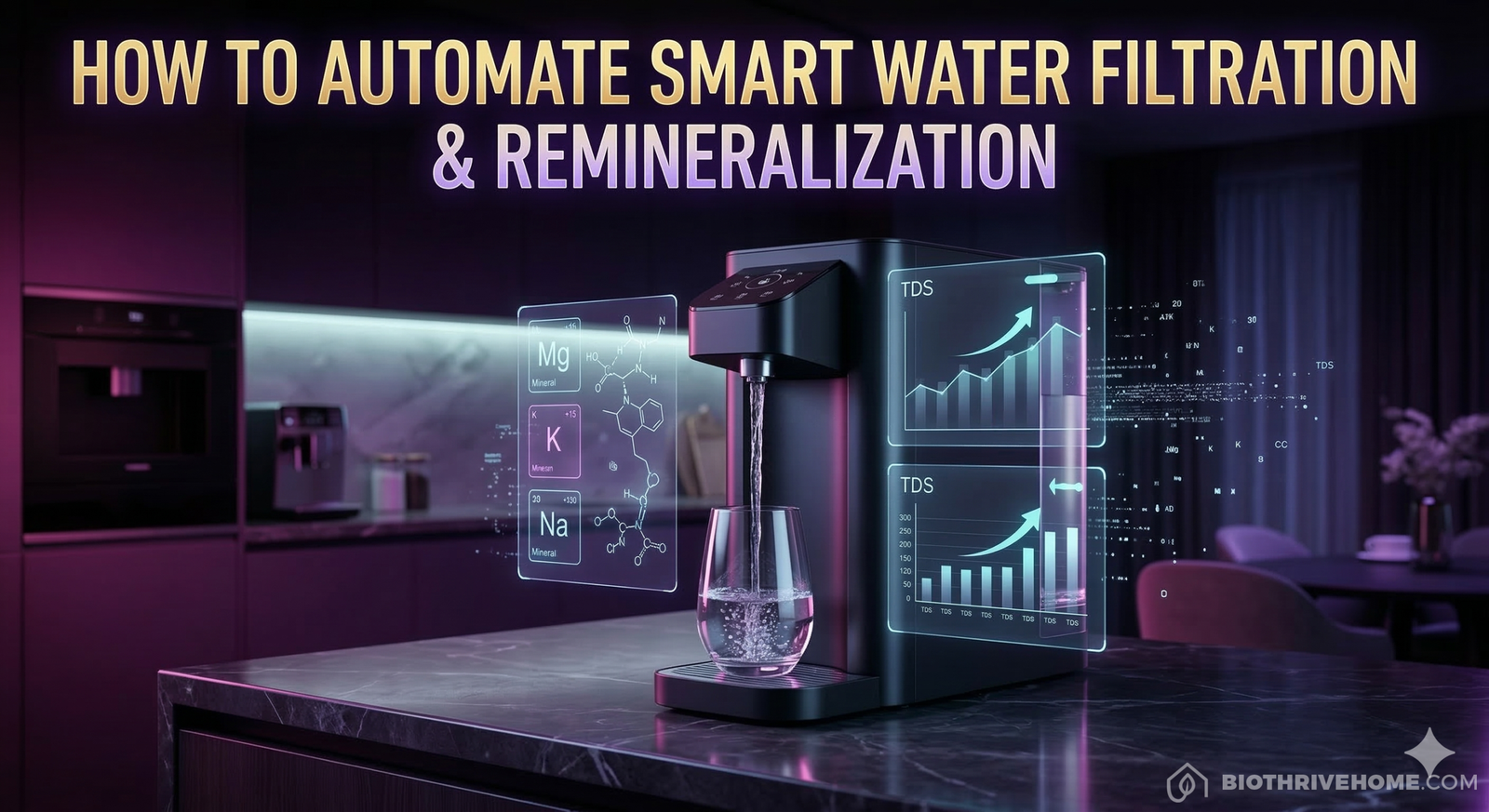
We track our macros, measure our HRV, and optimize our sleep lighting. Yet, the foundational element of our biology—water—is often treated as an afterthought. Most health-conscious individuals either drink tap water laden with microplastics and heavy metals, or they drink Reverse Osmosis (RO) water, which is effectively “dead water” completely stripped of the essential electrolytes your cells need to conduct energy.
In 2026, optimal hydration is not about volume; it is about cellular voltage. To achieve elite physical and cognitive longevity, your kitchen must become a precision hydration lab. Here is your step-by-step guide to automating smart water filtration and dynamic remineralization in your home.
Step 1: Strip the Toxins (Smart Reverse Osmosis)
You cannot optimize a contaminated baseline. Standard fridge filters only remove basic odors; they do not remove microscopic endocrine disruptors.
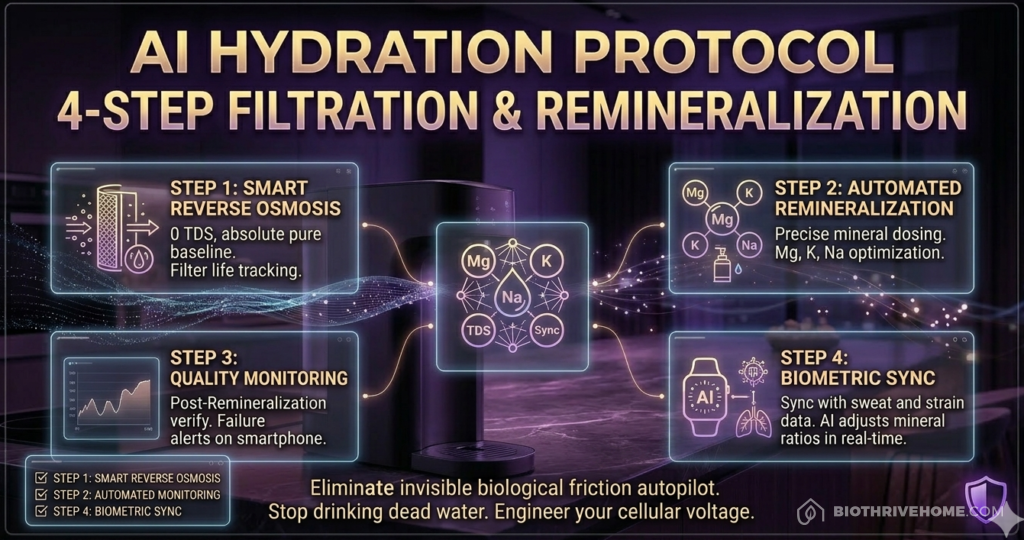
- How To: Install an under-sink, high-efficiency Reverse Osmosis (RO) system. However, in an AI-optimized kitchen, your RO system must be “smart.” Modern systems include built-in sensors that track the exact lifespan of your membrane based on the volume of water processed, rather than a generic timeline. This ensures you are always starting with a perfect, 0 TDS (Total Dissolved Solids) blank canvas, much like clearing the air in How to Eradicate Indoor Toxins and Noise: The AI-Guided Invisible Environment Guide.
Step 2: Automate Precision Remineralization
Drinking 0 TDS water aggressively leaches minerals from your bones and tissue. You must rebuild the water profile before it enters your body.
- How To: Connect an automated remineralization doser to your RO output line. Instead of manual mineral drops, these smart dosing pumps inject a precise liquid blend of bioavailable Magnesium, Potassium, and trace Sodium into the water right before the faucet. This transforms dead water into living, structured hydration, providing the raw electrical fuel required for the deep recovery protocols we established in How to Build a Data-Driven Sleep Sanctuary in 2026 (A Step-by-Step Guide).
Step 3: Implement Real-Time Quality Monitoring (The Dashboard)
Never trust that a system is working without verifying the data.
- How To: Install an inline smart water monitor. This device reads the water flow in real-time and transmits the data to your smart home hub. It measures the exact TDS levels after remineralization to ensure your dosing pump is accurate. If the mineral concentration drops, or if the filter fails, the system immediately sends a push notification to your phone, operating on the same preventative logic we discussed in How to Start Tracking Your Biomarkers at Home: The Beginner’s Biohacking Guide.
Step 4: Sync Hydration with Your AI Biometrics
Your hydration needs are not static. A heavy workout or a poor night of sleep drastically changes your cellular demand for electrolytes.
- How To: Integrate your smart kitchen ecosystem with your personal wearable data. By connecting your hydration dashboard to the system outlined in The Rise of the Personal AI Health Assistant: Your 24/7 Longevity Coach, your AI can analyze your daily strain and sweat loss. If your wearable detects a high-strain day, the AI will prompt your smart water dispenser to increase the magnesium and potassium ratio in your next glass, delivering hyper-personalized recovery on demand.
Conclusion: Engineering Cellular Voltage
By upgrading your kitchen with smart filtration and automated remineralization, you eliminate the silent biological tax of poor water quality. You transition from merely drinking water to actively engineering your cellular voltage, ensuring every sip supports your peak cognitive output and long-term healthspan.