How to Optimize Mitochondrial Health with Automated Red Light Therapy

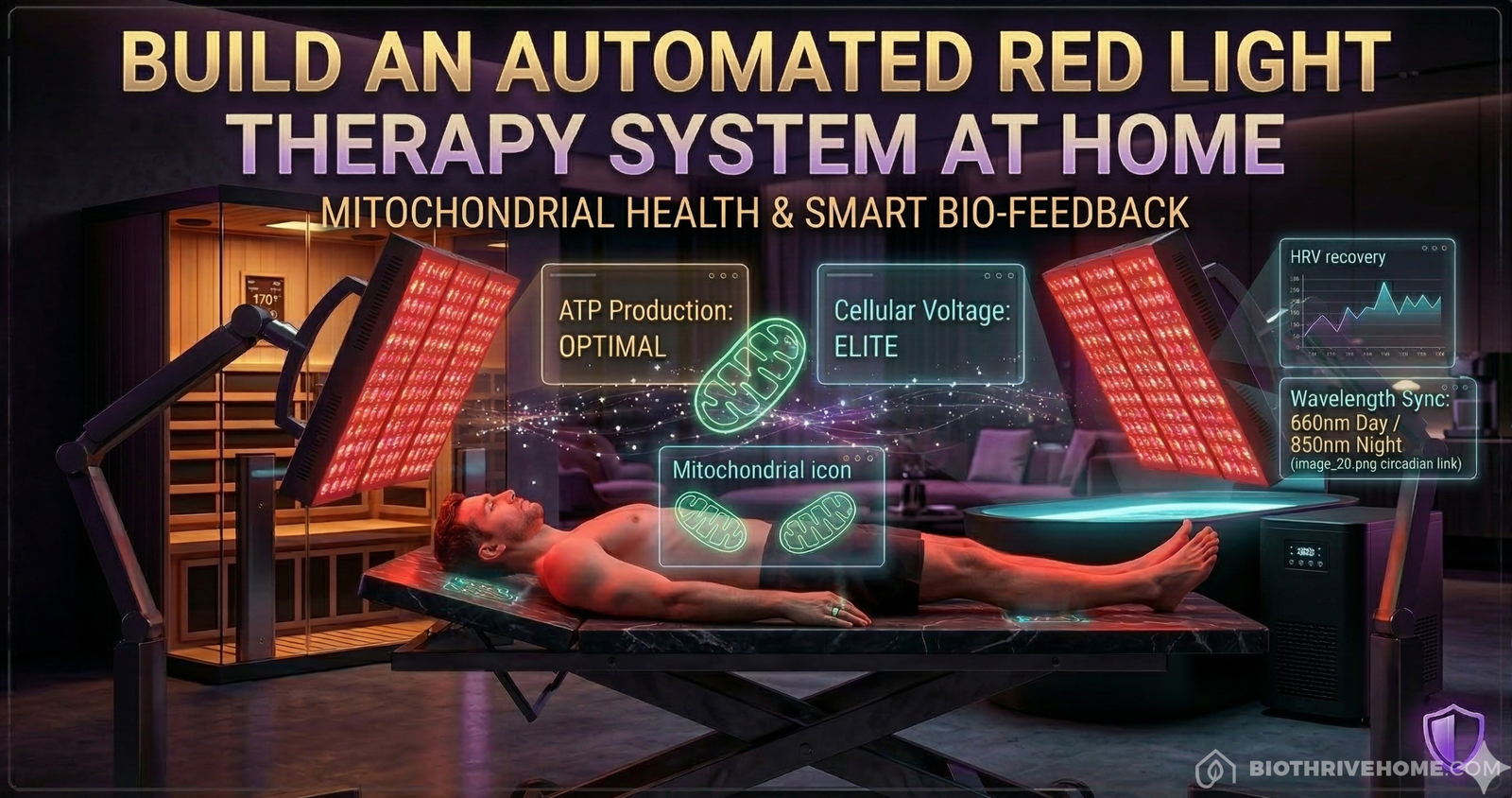
Mitochondrial dysfunction is the silent bottleneck of aging. Your mitochondria are the cellular power plants that produce ATP (Adenosine Triphosphate), the universal energy currency of your body. When ATP production plummets due to age, stress, or poor recovery, systemic fatigue and cognitive decline set in.
Red Light Therapy (RLT)—specifically within the red (660nm) and near-infrared (850nm) spectrums—is the golden biohack for mitochondrial optimization. The photons stimulate cytochrome c oxidase, increasing ATP synthesis and triggering a cascade of anti-inflammatory effects.
However, the biggest barrier to RLT success is consistency and precise dosing. Sitting still in front of a panel for 20 minutes is friction that causes users to abandon the practice. In 2026, we don’t adjust to technology; technology adjusts to our biology. Here is your step-by-step guide to automating medical-grade red light therapy in your home for peak mitochondrial health.
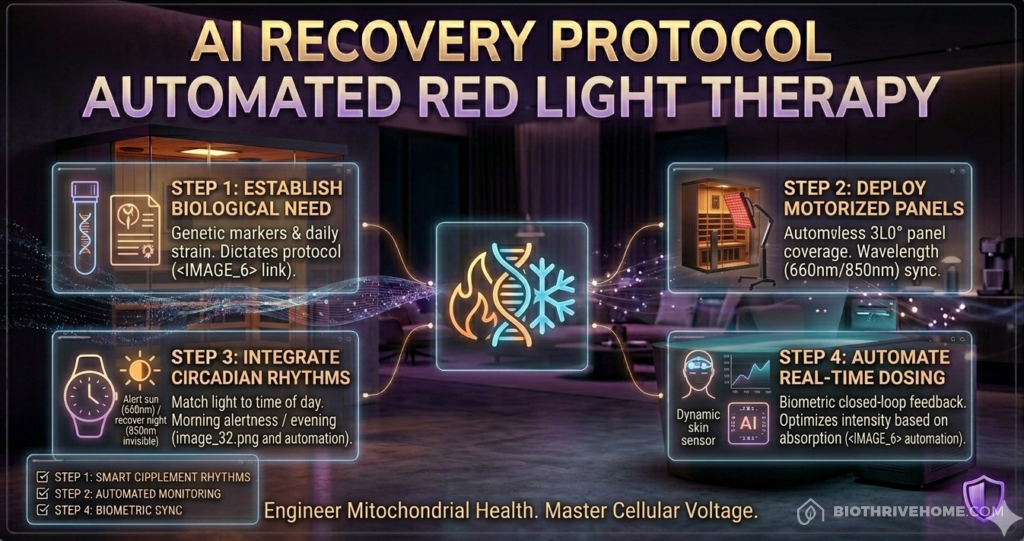
Step 1: Establish Your Biological Need (Data)
Do not blast your body with light arbitrarily. Precise Active Recovery requires precise data.
- How To: Your daily biological strain should dictate your RLT session. Integrate your wearable data hub, managed by your Personal AI Health Assistant. If your system detects a significant drop in your HRV baseline (Invisible Stress), indicating high central nervous system fatigue, the AI assistant creates a “Deep Tissue Recovery” protocol (Step 2) for that evening.
Step 2: Deploy Automated, Articulated Panels (Hardware)
Static panels require you to adjust your body. Automated panels adjust to your position.
- How To: Upgrade to articulated, motorized smart stand systems. Connect these to your smart home hub. When you initiate a session (via Step 1), the AI calculates your exact position (Step 4) and instructs the motorized stands to dynamically rotate and adjust the massive panels, ensuring your entire body receives a flawless 360° dose of specific wavelengths without you having to shift a muscle, removing the manual setup friction found in traditional Contrast Therapy.
Step 3: Integrate Wavelength Syncing with Circadian Rhythms
The wrong light at the wrong time disrupts your circadian rhythm, canceling out the recovery benefits.
- How To: Take absolute control of your environmental lighting ecosystem. If you are doing RLT in the morning, program your system to deliver an intense dose of 660nm (red) light to mimic alertness-inducing daylight. In the evening, the system must shift to exclusive 850nm (near-infrared) light—which is invisible to the human eye but penetrates deep into muscle and bone—while ensuring your smart bulbs remain in a circadian-safe amber hue, utilizing the automation logic from the Data-Driven Sleep Sanctuary.
Step 4: Automate Real-Time Dosing Feedback (The Closed-Loop)
Standard protocols assume your skin is always the same. Real-time biology is dynamic.
- How To: Implement inline NIRS (Near-Infrared Spectroscopy) sensors or dynamic skin-temperature wearables. This is the ultimate preventative and optimization logic from the Beginner’s Biohacking Guide to Tracking Biomarkers. These sensors read real-time localized recovery markers during the treatment. If the AI detects your tissue temperature is rising too fast or the near-infrared absorption peaks, it automatically throttles down the panel intensity or shortens the session time to maximize therapeutic benefit and prevent adaptive fatigue.
Conclusion: Cellular Energy on Demand
By upgrading your home with automated, biometric-synced Red Light Therapy systems, you eliminate the cognitive tax of recovery. You are no longer just treating inflammation; you are actively engineering your mitochondrial health, guaranteeing maximum ATP production with zero daily friction, turning your living space into an intelligent longevity engine.