
The desire to connect with our food sources and live more sustainably is stronger than ever in 2026. However, for many urban dwellers, the dream of a sprawling organic garden feels out of reach due to limited space. At BioThrive Home, we believe that anyone, anywhere, can be a successful micro-farmer.
Your home is a potential sanctuary for growth. Here are essential indoor gardening tips to help you cultivate a thriving harvest, even in the smallest city apartment.
1. Light: The Engine of Growth
The biggest challenge indoors is light. While a south-facing window is ideal, most homes do not provide enough natural light for edible plants to thrive.
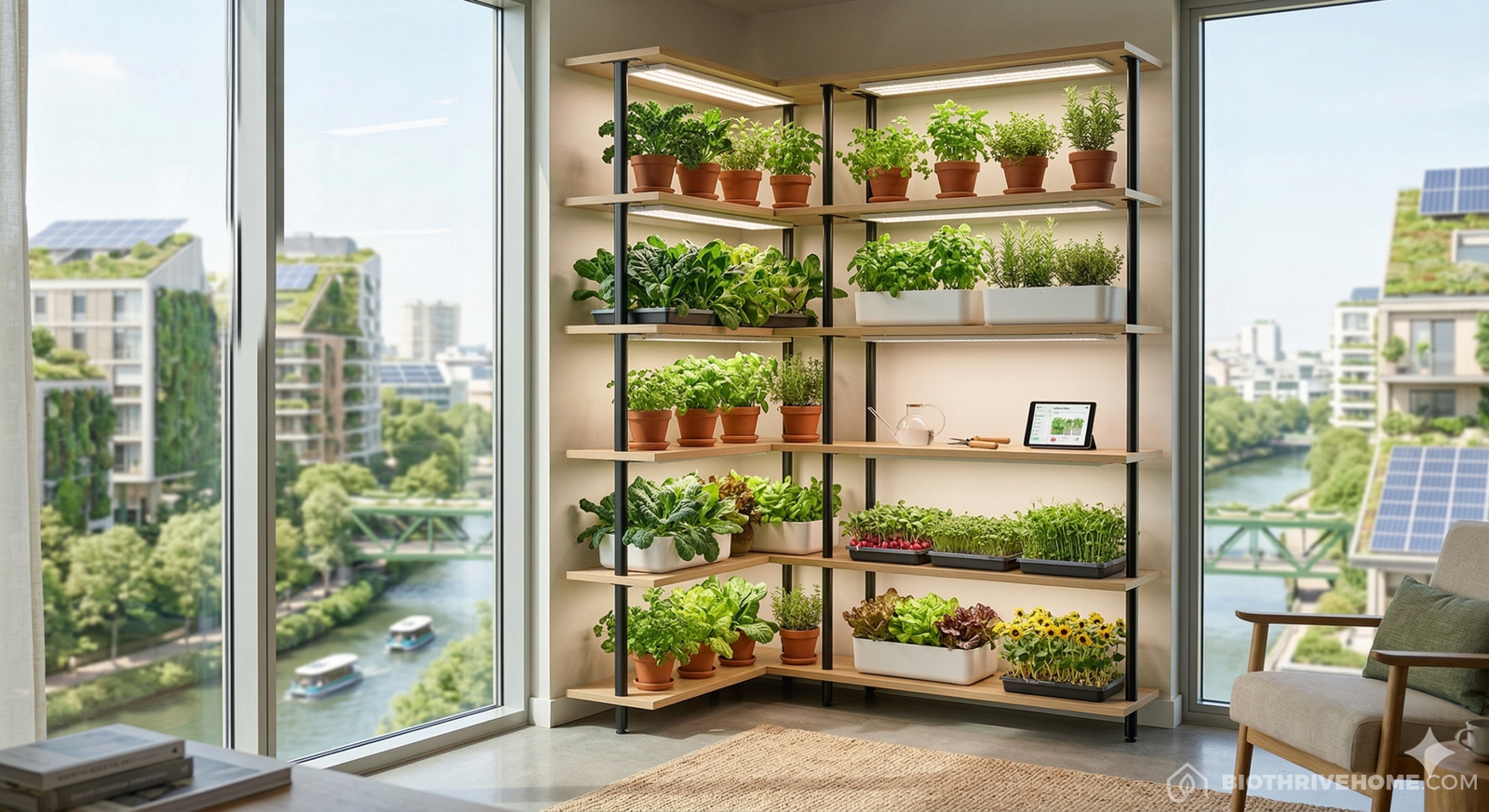
- The Fix: Invest in full-spectrum LED grow lights. Modern LEDs consume very little energy and can be programmed to mimic natural sunlight, ensuring your greens (like spinach and basil) get the 12-16 hours of daily “sun” they need. Position the light 6-12 inches above the canopy for maximum efficiency.
2. Water: The Balance of Life
Over-watering is the #1 killer of indoor gardens. In a container environment, roots cannot “search” for dry soil, leading to root rot.
- The Fix: Use the finger test. Insert your finger an inch into the soil; if it’s dry, it’s time to water. Crucially, ensure every pot or tray has drainage holes to allow excess water to escape.
3. Air: The Forgotten Nutrient
Plants need CO2 and consistent airflow to respire and avoid fungal diseases. In tight, well-insulated modern homes, the air can become stagnant.
- The Fix: A small, low-wattage oscillating fan keeps the air moving, simulating a natural breeze. This strengthens the plant stems and reduces the risk of pests like fungus gnats.
4. Soil vs. Hydroponics: Choosing Your System
When you are a beginner, you must decide how you will grow.
- Soil: Traditional and therapeutic. Use a high-quality potting mix (never outdoor garden soil) mixed with compost for nutrients and perlite for aeration.
- Hydroponics (Passive): Consider microgreens or simple Kratky-method jars. They require no electricity and allow you to harvest fresh greens in as little as 10 days.
5. What to Grow: Start Small for Big Wins
Don’t try to grow watermelons or potatoes on your first try. Start with quick-win crops that offer a high “BioThrive” value.
- Microgreens: Nutritious and ready in 1-2 weeks (radish, kale, peas).
- Herbs: Essential for any sustainable kitchen (basil, cilantro, mint).
- Leafy Greens: Fast-growing and continuous harvest (lettuce, arugula).
Conclusion: Cultivating Your Sanctuary
Growing food indoors isn’t just about sustainability; it’s about resilience and vitality. By creating a thriving environment for plants, you are also improving the air quality and energy of your home.
The first step is always the hardest, but the reward—your own fresh, hyper-local produce—is worth every effort.