The Circadian Smart Home: Hacking Your Lighting for Optimal Hormonal Balance in 2026

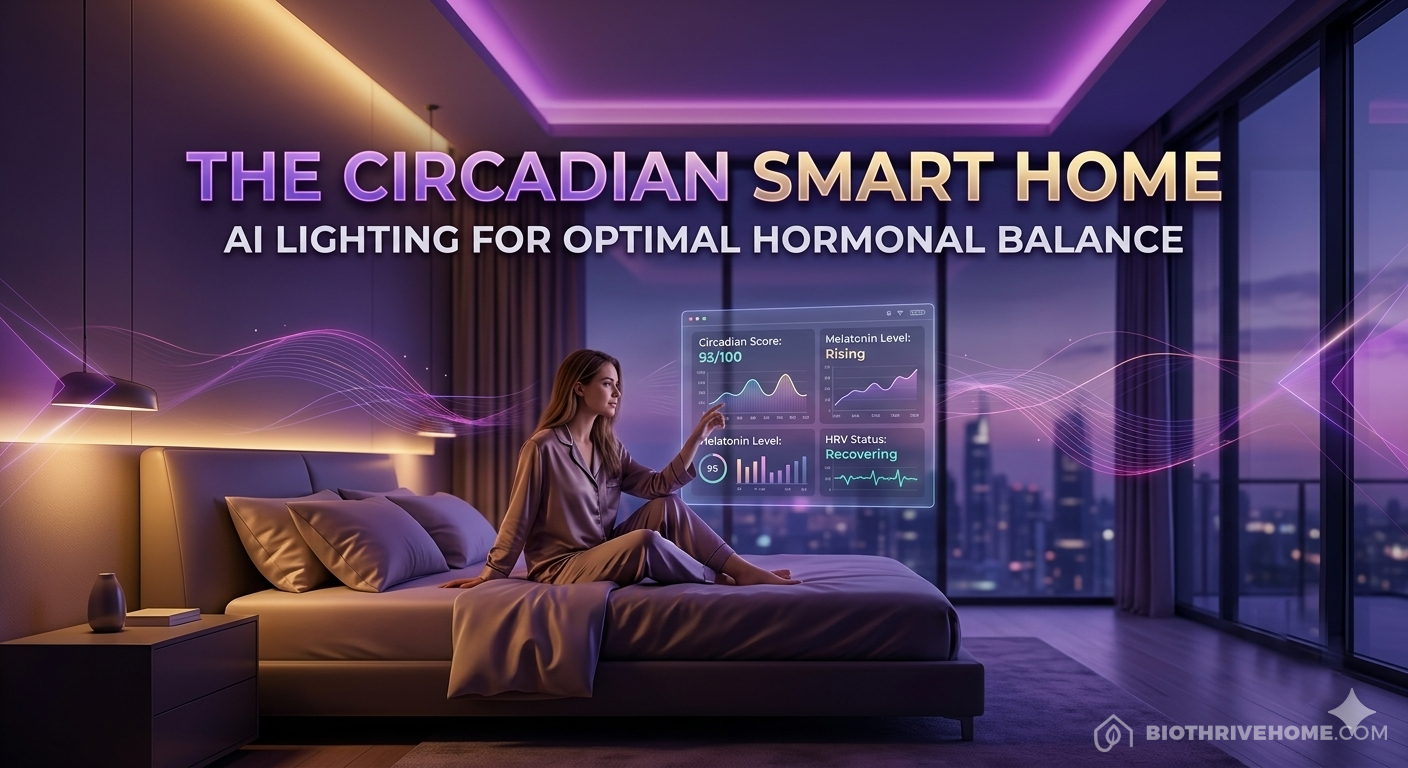
If you are tracking your sleep, optimizing your nutrition, and monitoring your HRV, but still feel fatigued, the culprit might be invisible. In 2026, we now understand that light is not just for vision; it is a biological signaling mechanism. Artificial “junk light” after sunset is the equivalent of eating fast food before bed—it disrupts your entire metabolic and hormonal baseline.
The concept of the “Circadian Smart Home” relies on AI-driven lighting systems that automatically shift color temperature and intensity throughout the day, mirroring the natural progression of the sun. This is no longer a luxury aesthetic; it is a foundational pillar of human longevity.
The Biology of Light: Cortisol vs. Melatonin
Your body operates on a 24-hour internal clock guided primarily by light exposure to the retina.
- Morning (Blue/Cool Light): Signals the brain to halt melatonin production and spike cortisol, giving you focus and energy.
- Evening (Amber/Warm Light): Signals the brain that the day is ending, gradually releasing melatonin to prepare for deep, restorative sleep.
When you expose yourself to standard LED screens and bright overhead lights at 9 PM, you are chemically confusing your brain, leading to delayed sleep onset and compromised recovery.
Top AI Lighting Systems for Biohackers in 2026
1. The Ecosystem Leader: Philips Hue AI Sync Engine Philips has integrated predictive AI into their Hue ecosystem. The system doesn’t just run on a timer; it syncs with your wearable data (like Oura or Whoop) to adjust your home’s lighting based on your real-time recovery score. If your HRV is low, the system dims earlier in the evening to promote an extended wind-down routine.
2. The Task-Specific Innovator: Dyson Lightcycle Morph 2.0 Dyson’s latest iteration uses local daylight tracking algorithms. It calculates your exact geographical location and the time of year to perfectly mimic the outdoor light temperature indoors. It is the ultimate tool for home offices, reducing eye strain and preventing the mid-afternoon energy crash.
3. The Sleep Sanctuary Approach: Hatch Restore Pro While not a whole-home system, the Hatch Restore Pro is essential for the bedroom. It utilizes a scientifically backed “sunset protocol” that gradually shifts from soft ambient reading light to a deep red hue, completely eliminating blue light exposure in the final hour before sleep.
The BioThrive Daily Lighting Protocol
To build your own circadian sanctuary, start small:
- The 10 AM Rule: Maximize bright, cool light (preferably natural sunlight) before 10 AM to set your circadian rhythm.
- The Sunset Shift: Automate your smart bulbs to shift to a warm, amber glow (under 2700K) at least two hours before your target bedtime.
- The Red Light Zone: Use dedicated red nightlights in bathrooms and hallways to navigate at night without suppressing melatonin.
By handing the control of your environment over to smart algorithms, you remove the friction of making healthy choices. Your home actively works to heal you, making deep sleep an automatic outcome rather than a nightly struggle.