How to Build an Automated Indoor Micro-Farm in Small Spaces

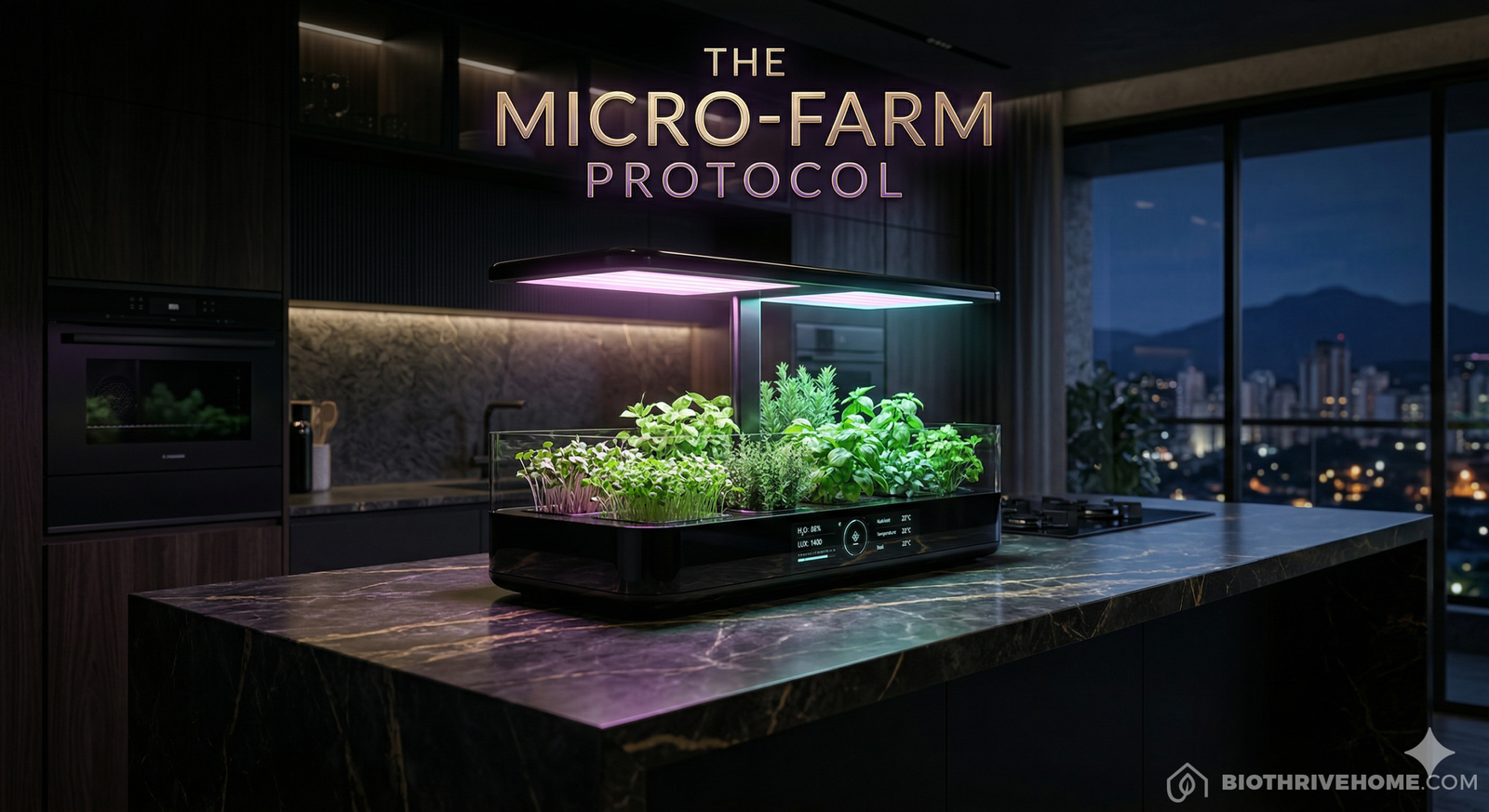
Securing your biological sovereignty through indoor micro-farming is a profound paradigm shift. However, the execution must be flawless. In a high-performance lifestyle, there is no room for the mess of traditional soil gardening, the unpredictability of pests, or the time drain of manual watering.
To harvest elite, living nutrition inside a compact apartment, you must engineer a frictionless system. By combining soil-free hydroponics with automated LED spectrums, you can create a highly efficient, self-sustaining biological engine in less than two square feet. Here is the exact protocol to build and automate your indoor micro-farm.
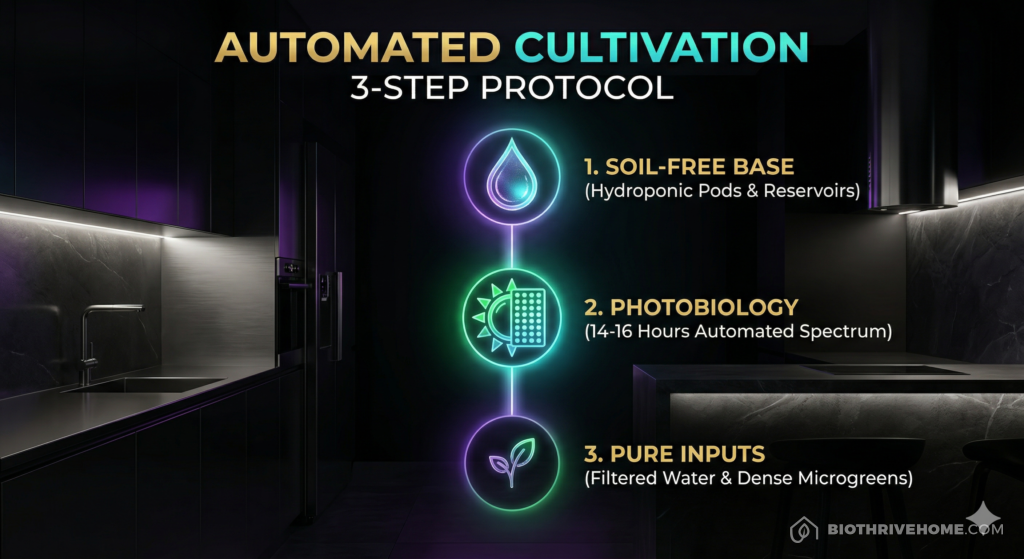
1. The Hydroponic Architecture: Eliminating Soil
Traditional soil brings dirt, variable nutrient profiles, and the risk of indoor pests—elements that disrupt a bio-optimized home sanctuary. The core of an apartment micro-farm is hydroponics.
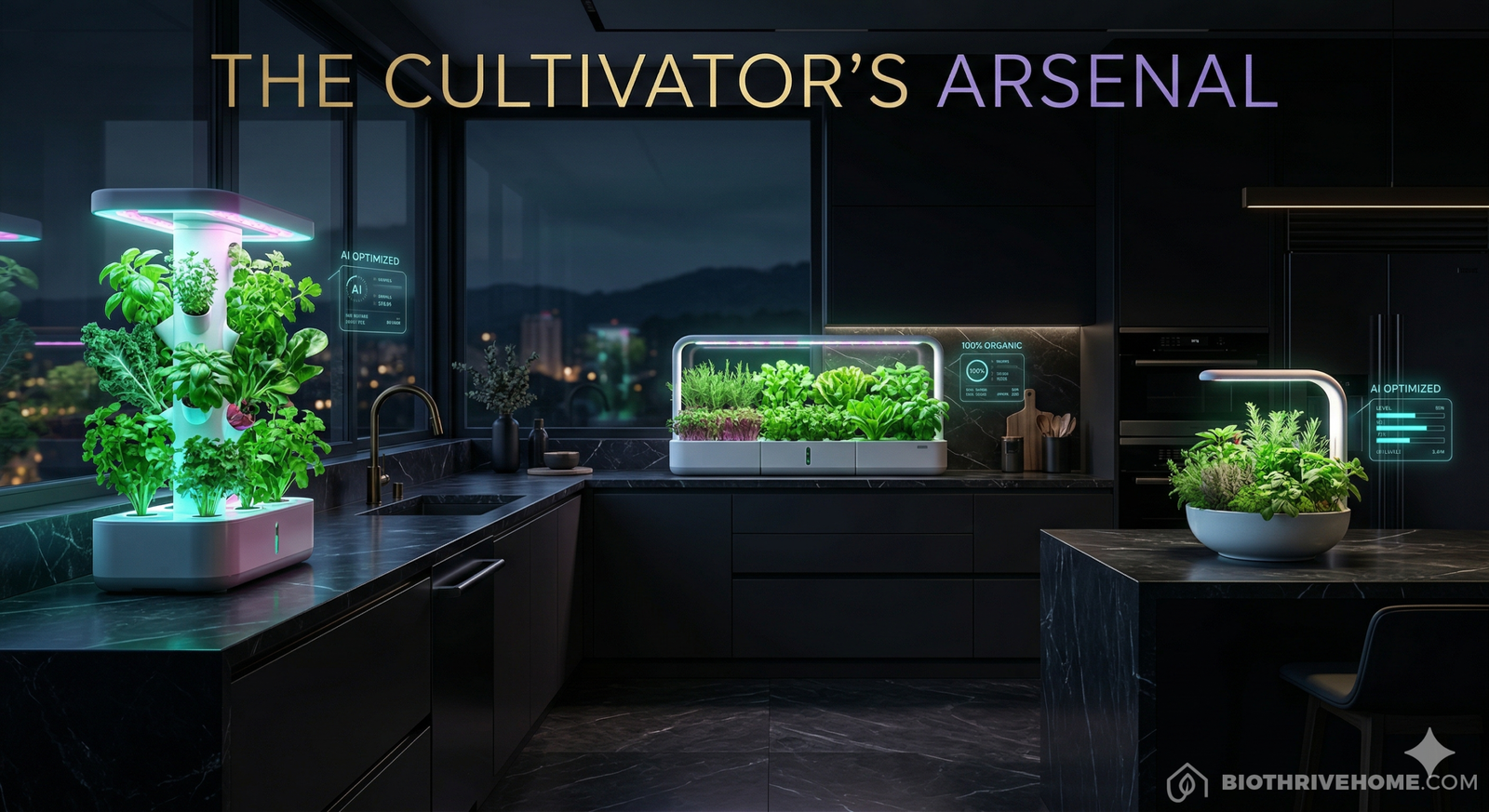
- The Countertop Pod System: If space is your absolute primary constraint, start with a smart countertop garden. These systems use pre-seeded pods and a water reservoir. They sit seamlessly on a kitchen island, acting as an automated dispensary for high-density herbs and microgreens.
- The Vertical Ecosystem: If you have a single empty corner, a vertical aeroponic tower is the ultimate upgrade. It pumps a nutrient-dense mist directly onto the bare roots of the plants, allowing you to grow heavy-yield crops like kale, Swiss chard, and strawberries vertically, maximizing your yield-to-footprint ratio.
2. Hacking the Light Spectrum
Just as human cells require specific red light wavelengths for mitochondrial recovery, plants require precise photobiology to express their peak phytonutrients. You cannot rely on a sunny windowsill; you must automate the sun.
- Precision LED Spectrums: Ensure your system uses full-spectrum LED grow lights, specifically calibrated with deep red and blue wavelengths to optimize photosynthesis.
- The Circadian Timer: Plants, like humans, have a circadian rhythm and require dark periods to rest and metabolize energy. Automate your grow lights via a smart plug or the system’s native app to run for exactly 14 to 16 hours a day. Sync this with your own AI-guided morning routine so the lights turn on when you wake up, preventing any disruption to your evening wind-down.
3. The Biological Input: Seeds and Purified Water
An automated system is only as good as the inputs you feed it. To harvest clinical-grade nutrition, you must control the baseline elements.
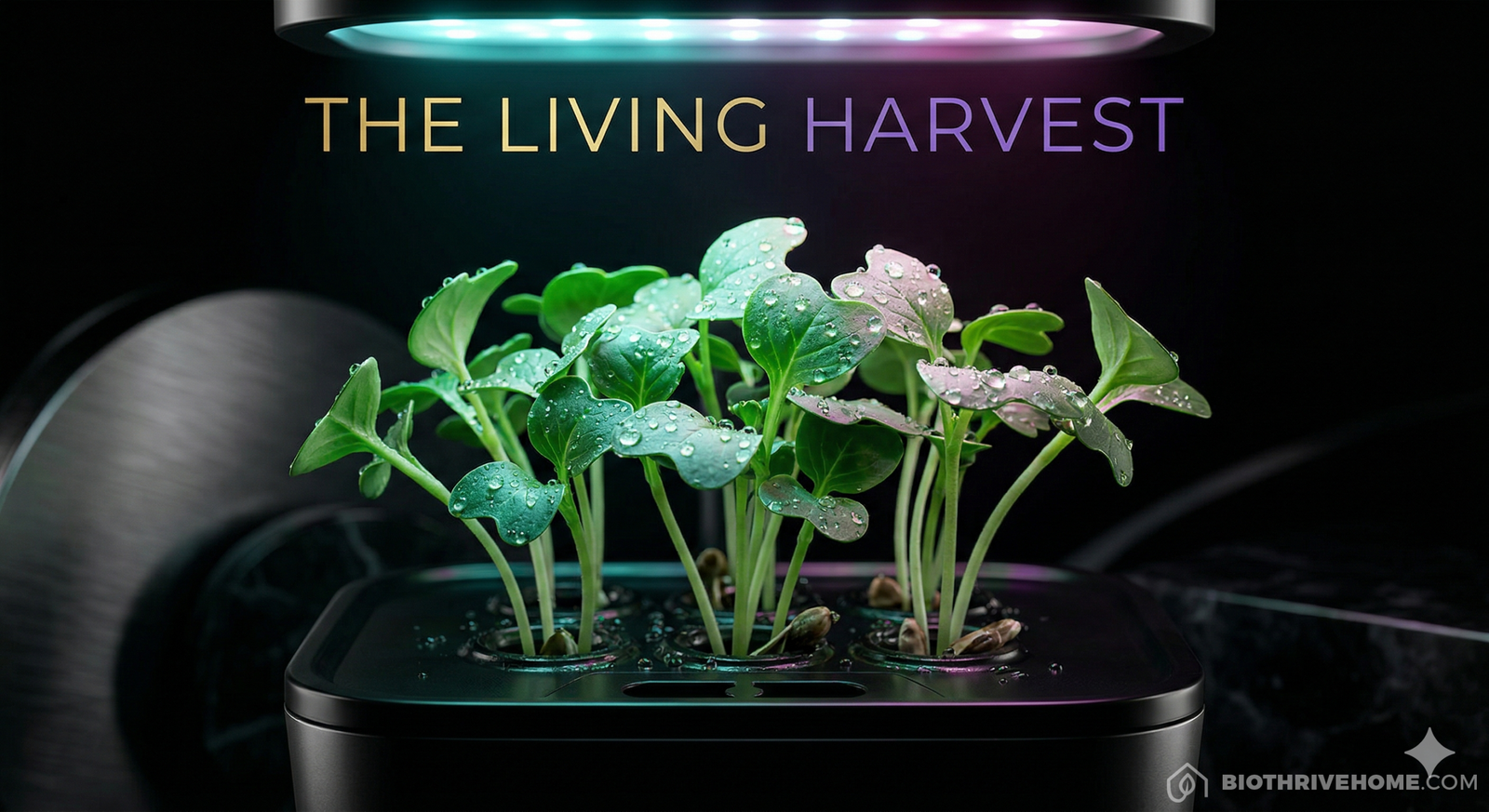
- Hyper-Nutrient Seeds: Focus your initial harvests on microgreens like broccoli, radish, and arugula. Broccoli microgreens are scientifically proven to contain up to 100 times more sulforaphane—a powerful longevity and anti-inflammatory compound—than mature broccoli. They go from seed to harvest in just 7 to 14 days.
- Toxin-Free Hydration: Never fill your hydroponic reservoir with unfiltered tap water. The chlorine and heavy metals will stunt root development and ultimately end up in your cells. Always use reverse osmosis or clinical-grade filtered water to ensure your plants are growing in a pristine, detoxified environment.
🌱 The Biological Sovereignty Masterclass
Don’t miss any part of our definitive guide to automated indoor nutrition:
- Part 1: The Paradigm: [The End of Supermarket Nutrition: Why Indoor Micro-Farming is the Ultimate Longevity Hack]
- Part 2: The Protocol: [How to Build an Automated Indoor Micro-Farm in Small Spaces]
- Part 3: The Gear: [The Best Smart Indoor Gardens for Your Bio-Optimized Kitchen (2026)]
Conclusion: Automate Your Vitality
Building an automated indoor micro-farm removes the friction from healthy eating. By outsourcing the lighting, watering, and nutrient delivery to smart technology, you guarantee a continuous supply of living, peak-harvest greens. Your kitchen becomes a decentralized hub for your personal healthspan.
Now that you understand the protocol for building a soil-free, automated ecosystem, which system should you actually buy? In the final part of our masterclass, we will review the top smart indoor gardens available on the market today.