Urban Micro-Farming: The Guide to Maximizing Bioavailability in Small Spaces

In 2026, the definition of a “garden” has changed. For the modern urban dweller living in a BioThrive Home, it’s not about acres; it’s about square inches of nutrient-dense bioavailability. We no longer just grow food; we grow targeted personal plant-based nutrition to fuel cellular health.
Limited space is no longer an excuse. In fact, compact environments force us to be smarter. Here is your guide to maximizing bioavailability through efficient indoor micro-farming.
1. The Superfood Solution: Microgreens and Sprouts
When space is at a premium, you must prioritize the highest nutrient density per square inch.
- Microgreens: Studies in 2026 confirm that microgreens (the young seedlings of herbs and vegetables) can contain up to 40 times more vitamins and antioxidants than their mature counterparts.
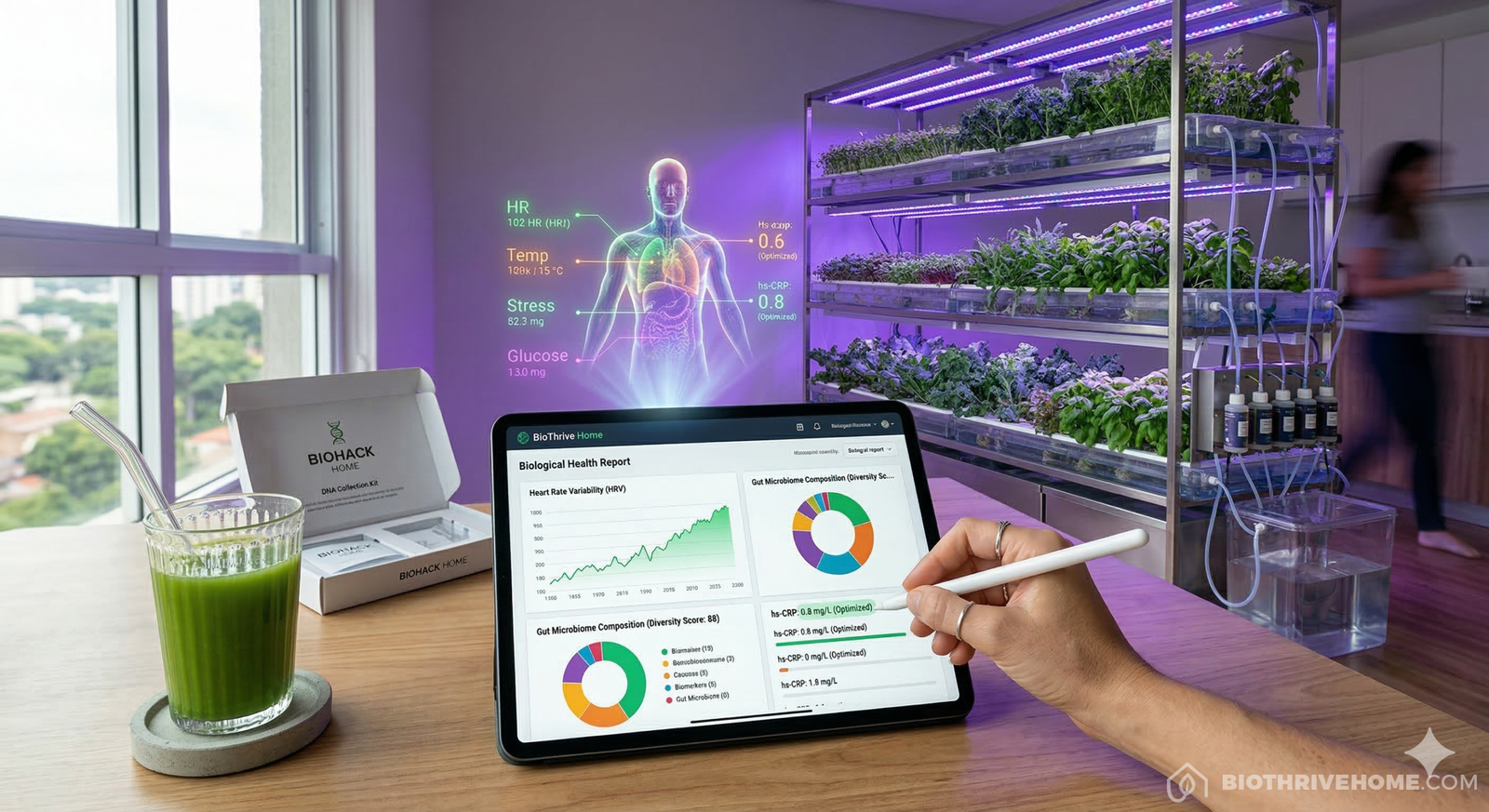
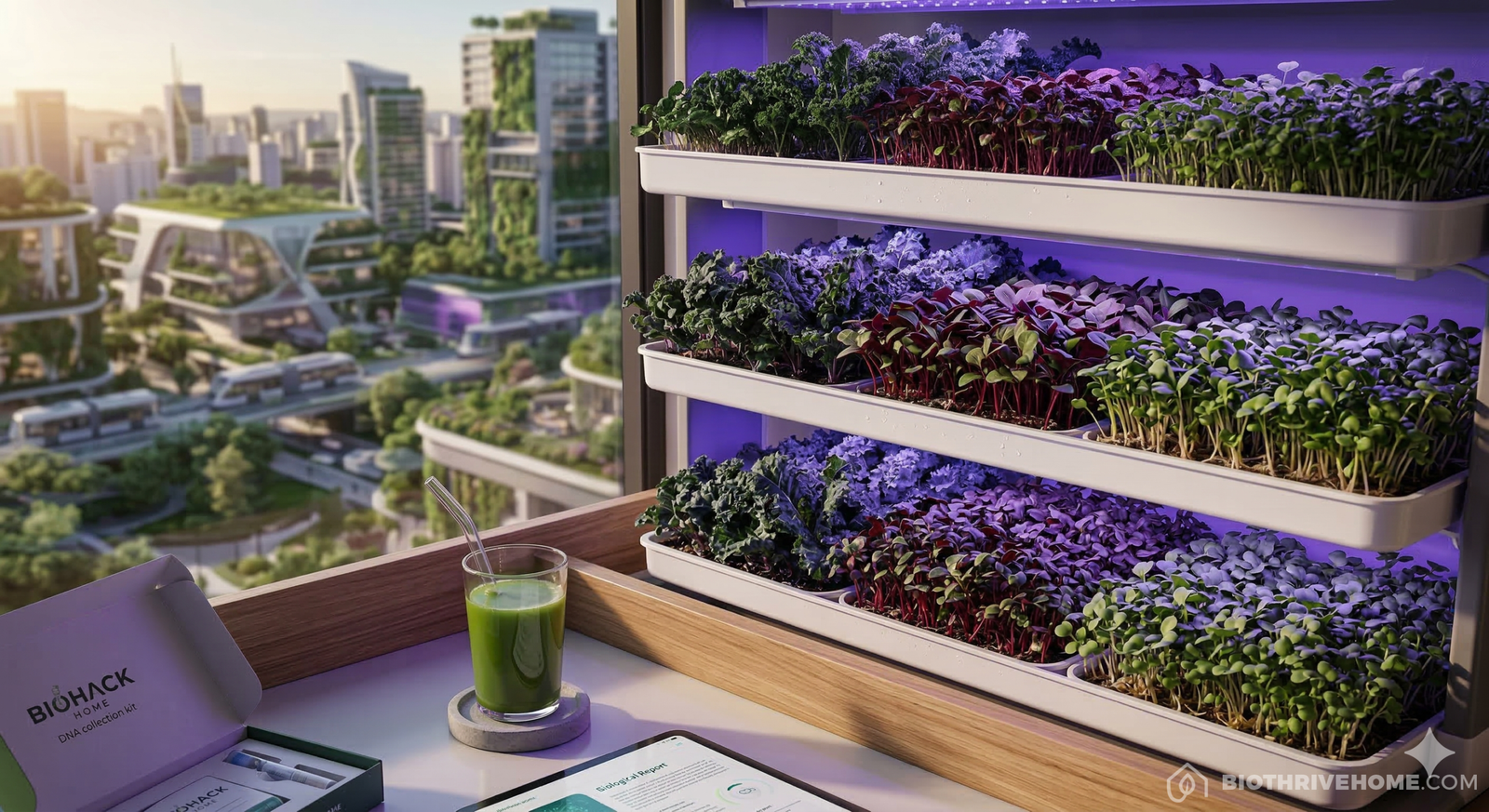
- Bioavailability: Growing greens like kale, radish, or broccoli in stacked stacked indoor gardening trays with integrated LED lights allows you to harvest them at their peak, ensuring that enzymes, polyphenols, and micronutrients are fully intact. The short growth cycle of 7-14 days maximizes nutrient absorption efficiency.
2. stacked Systems and Full-Spectrum Light
Traditional horizontal gardening is obsolete in a compact city apartment. Vertical systems are essential.
- Stacked Success: Use modular, stacked vertical trays. This quadruples your growing area without using extra floor space.
- The “Sun” Factor: Don’t rely on windows. In 2026, the newest full-spectrum LED grow lights are so efficient they can simulate the peak solar radiance required for high phytonutrient production. Proper lighting doesn’t just grow the plant; it triggers the specific stress responses (like producing anthocyanins in purple varieties) that increase antioxidant bioavailability.
3. Substrate vs. Simplified Hydroponics
For microgreens, you have two primary efficient paths:
- Substrate (Analog): Use organic coconut coir or specialized grow mats. They are sterile, hold water perfectly, and can be composted along with your targets for personal plant-based nutrition and other organic kitchen scraps to create a sustainable household loop, creating a zero-waste system.
- Simplified Hydroponics (Tech): For slightly larger plants, consider a simplified hydroponic system on your kitchen counter. This automated method uses water and mineral salts, which many argue provides even faster access to manage hydroponic nutrient levels with AI integration for maximum bioavailability, as plants don’t have to break down organic matter to access food.
Conclusion: Creating Your Resilient Sanctuary
Urban micro-farming is about resilience and vitality. By dedicating a small corner of your home to these concentrated bursts of energy, you ensure that no matter your zip code or the size of your space, your BioThrive lifestyle is always fueled by the freshest, most bioavailable nutrition possible.