Hydroponics vs. Soil: Which is Better for Urban Sustainable Living in 2026?

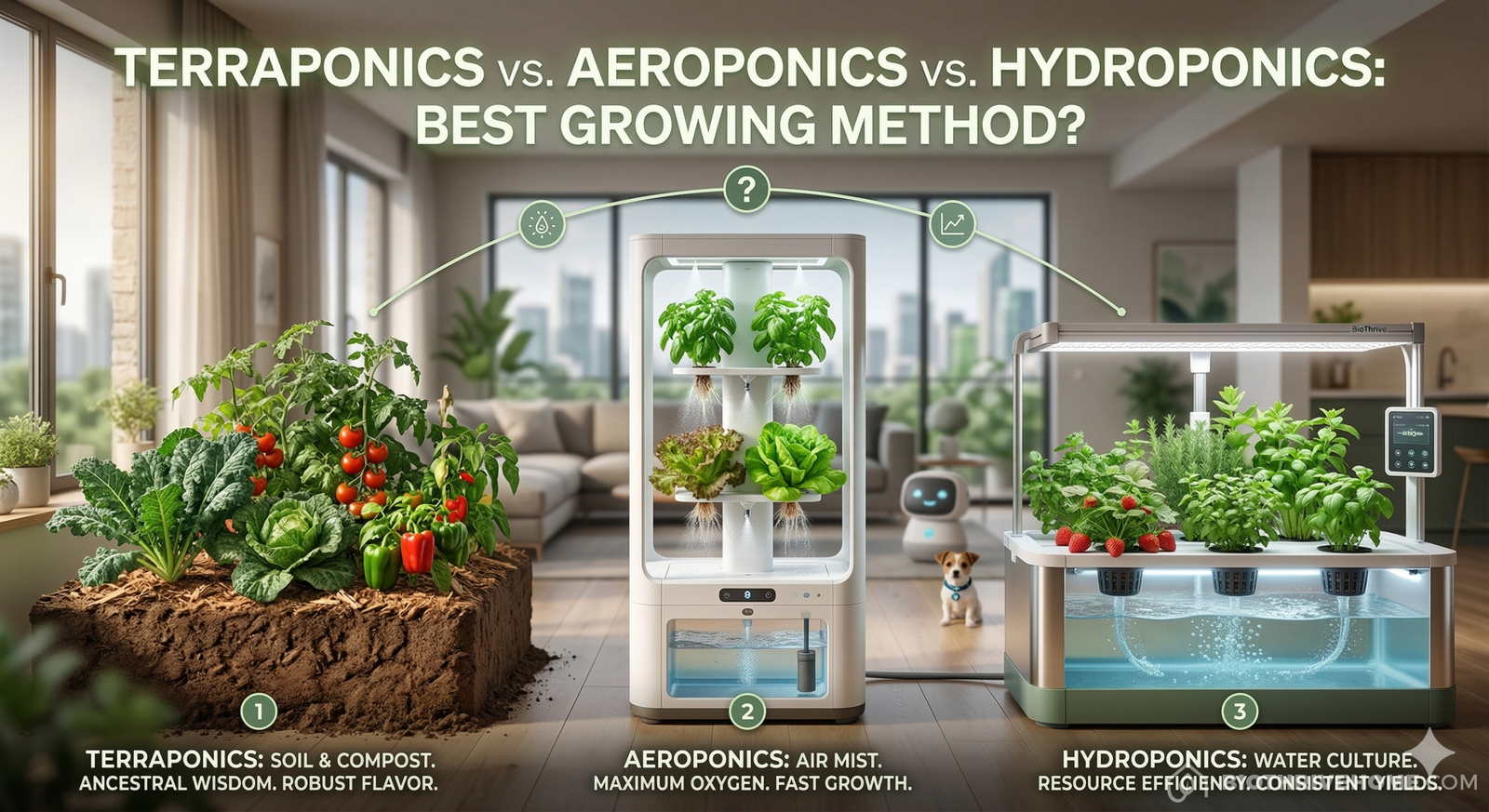
As we move toward more resilient and self-sufficient lifestyles, the question for the modern urban dweller is no longer if they should grow their own food, but how. At BioThrive Home, we are seeing a major debate in the 2026 gardening community: Should you stick with the ancestral wisdom of Soil Gardening, or embrace the high-tech efficiency of Hydroponics?
Both systems have their place in a sustainable sanctuary. Here is a deep dive into which one fits your urban lifestyle best.
1. Space Efficiency: The Urban Challenge
In city apartments and small suburban homes, space is the ultimate luxury.
- Hydroponics: This is where technology shines. Hydroponic systems, especially vertical towers, can produce up to 3x more food in the same footprint as soil. Because plants don’t need to “search” for nutrients through the earth, their roots stay small, allowing for denser planting.
- Soil: Traditional pots and raised beds require more horizontal space. While beautiful, they can be heavy and messy for indoor use.
2. Resource Management: Water and Nutrients
In 2026, sustainability is synonymous with resource conservation.
- Hydroponics: Contrary to popular belief, hydroponics uses 90% less water than soil gardening. The water is recirculated in a closed loop, meaning almost none is wasted through evaporation or runoff.
- Soil: Water management in soil can be tricky. It’s easy to over-water or under-water, and much of the moisture simply drains away. However, soil acts as a natural buffer, holding nutrients in a way that is more forgiving if you forget to fertilize for a few days.
3. Growth Speed and Yield
If you’re looking for a quick “farm-to-table” turnaround, the data is clear.
- Hydroponics: Plants in hydroponic systems typically grow 30% to 50% faster than those in soil. With AI-driven nutrient monitors (a staple in the BioThrive Home), plants receive the exact “diet” they need 24/7.
- Soil: Growth is slower, following the natural pace of the seasons. However, many enthusiasts argue that soil-grown produce has a more complex flavor profile due to the diverse minerals and microbes found in high-quality organic earth.
4. Maintenance and “The Tech Factor”
- Hydroponics (High-Tech): It requires a learning curve. You’ll need to monitor pH levels and nutrient concentrations. In 2026, most of this is automated via smartphone apps, but you still need to be comfortable with pumps and sensors.
- Soil (Low-Tech/Analog): Soil gardening is therapeutic and intuitive. It connects you directly with the biology of the Earth. There are fewer moving parts to break, making it a “fail-safe” method for beginners who prefer an analog hobby.
5. Sustainability and Waste
- The Soil Advantage: Soil is a living ecosystem. You can compost your kitchen scraps and return them to the earth, creating a perfect circular loop.
- The Hydroponic Challenge: While water-efficient, hydroponics often relies on liquid mineral salts and electricity to run pumps. For a truly sustainable setup, we recommend powering your hydroponic systems with solar energy.
The BioThrive Verdict
If you live in a compact urban apartment and want maximum yield with minimum mess, Hydroponics is your best bet for 2026.
However, if you have a balcony or small yard and value the meditative process of composting and traditional growth, Soil Gardening remains a timeless and effective choice.
Whichever you choose, the goal is the same: bringing the “Bio” back into your “Home.”